
Forming an ion changes electron number, not proton number. These qualitative comparisons link shell occupancy, nuclear charge and ionic size.
Choose from five images below. Open an image for a closer look, download its original PNG, or download all five as a ZIP.
Use these visuals in your lesson
Count protons and electrons before explaining the size changes; keep qualitative size comparisons separate from measured radii.
A question to discuss
Why does radius decrease across a series of ions with the same number of electrons?
Atoms and ions: changing size: five teaching visuals
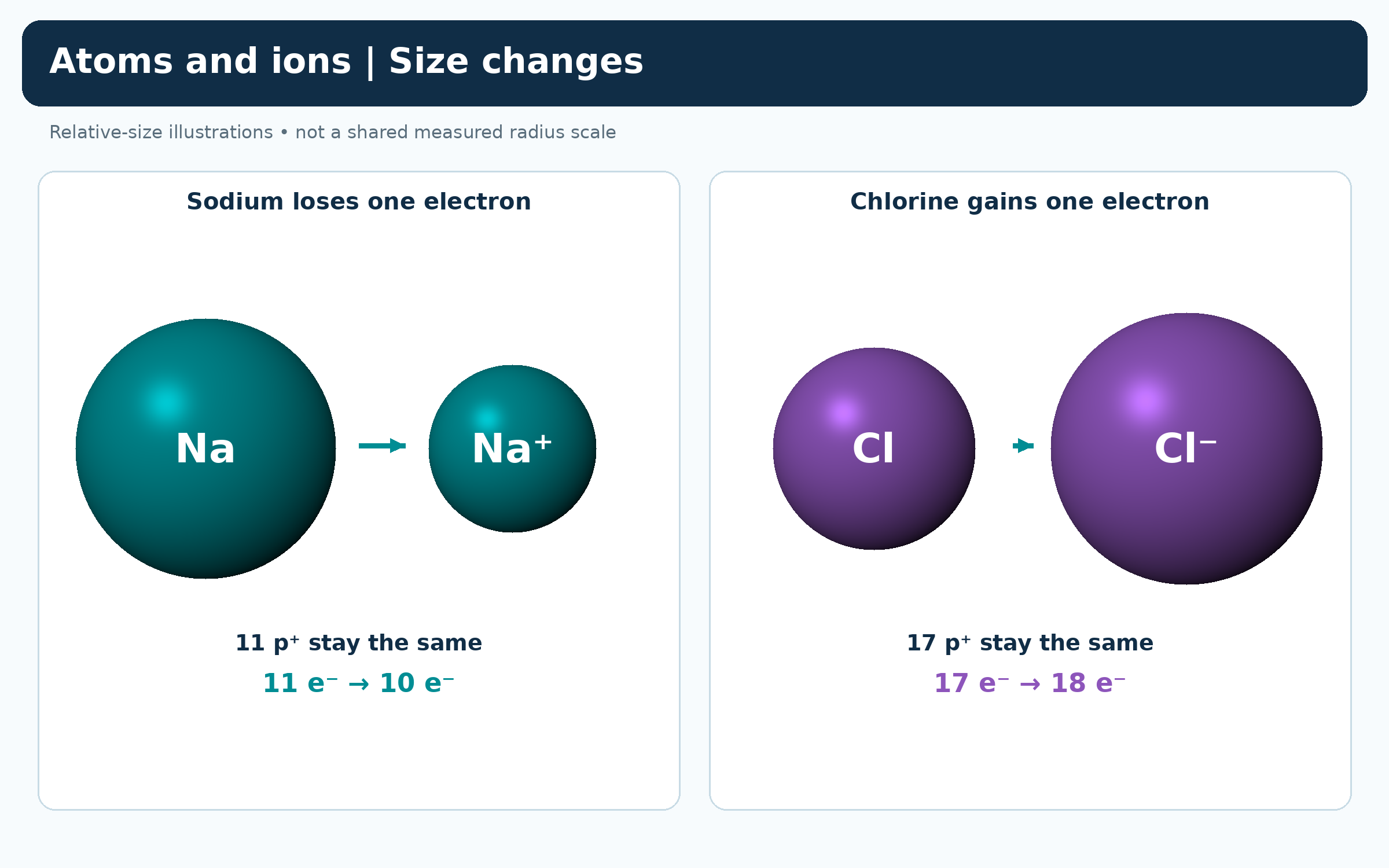
Atoms becoming ions
Atoms becoming ions
Sodium loses an electron and becomes smaller; chlorine gains an electron and becomes larger in a qualitative comparison.
Download original PNG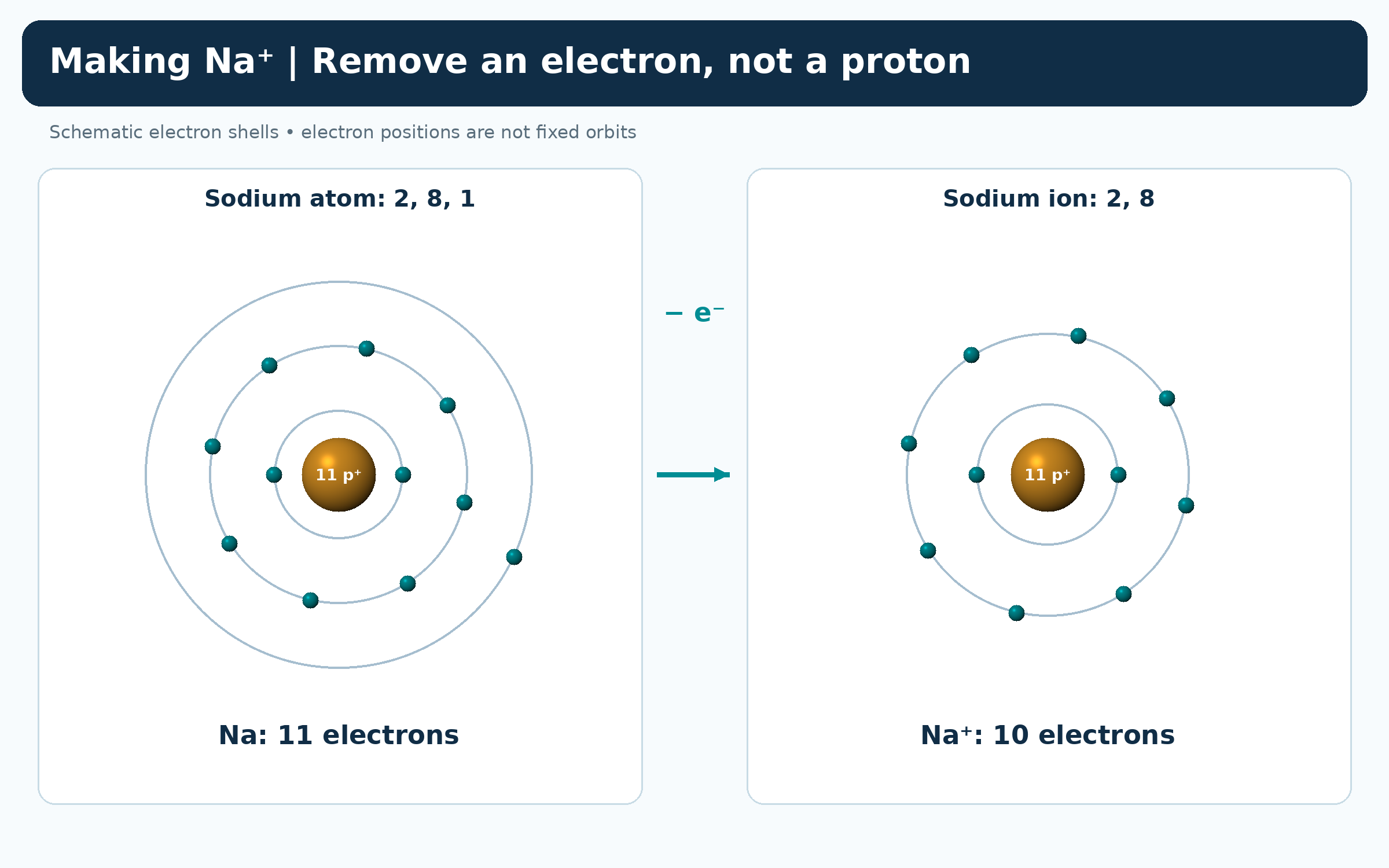
Sodium loses one electron
Sodium loses one electron
Shell diagrams compare sodium 2,8,1 with Na+ 2,8 while both nuclei retain eleven protons.
Download original PNG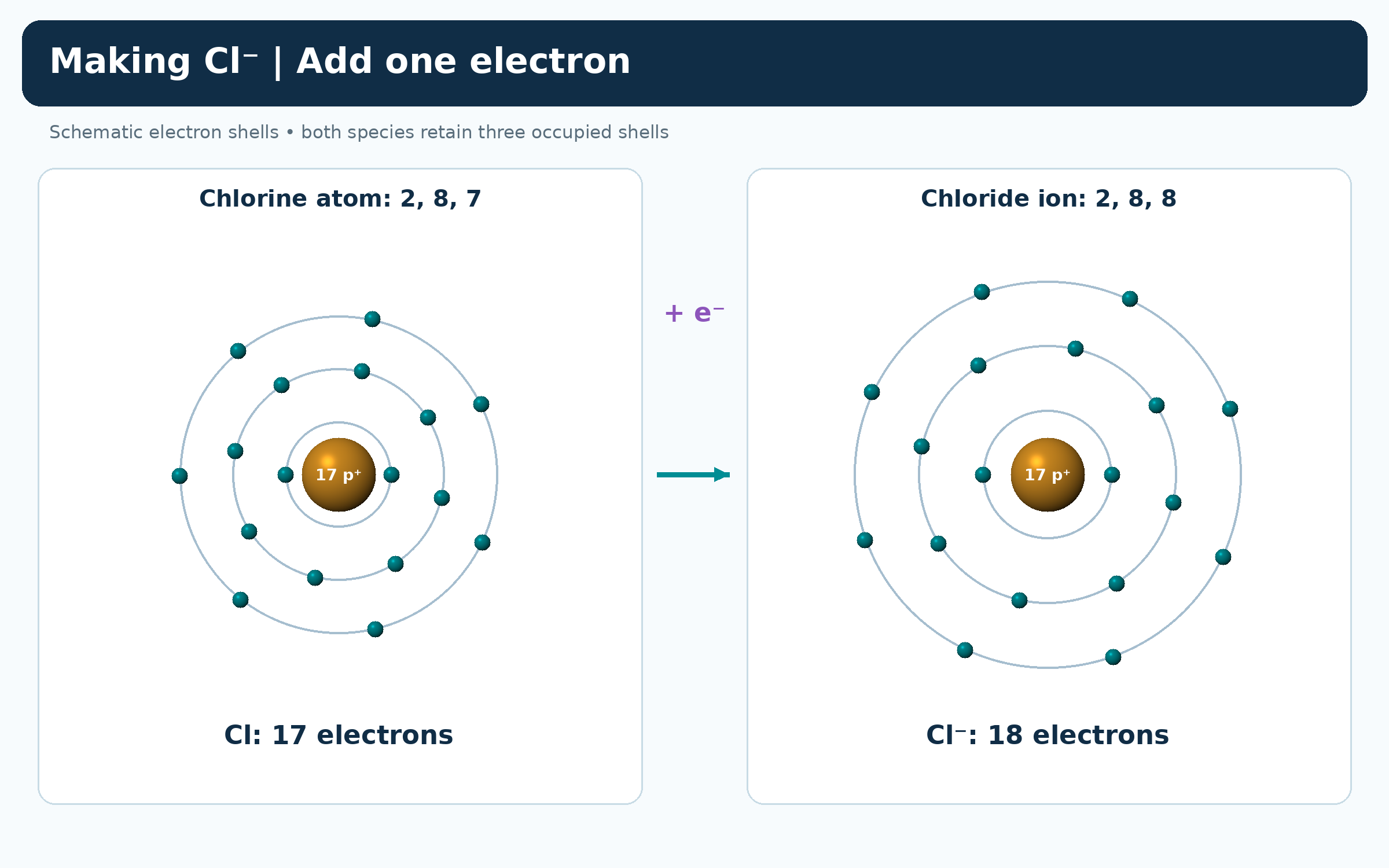
Chlorine gains one electron
Chlorine gains one electron
Shell diagrams compare chlorine 2,8,7 with chloride 2,8,8 while both nuclei retain seventeen protons.
Download original PNG
An isoelectronic series
An isoelectronic series
O2−, F−, Na+, Mg2+ and Al3+ share ten electrons but decrease in qualitative radius as nuclear charge increases.
Download original PNG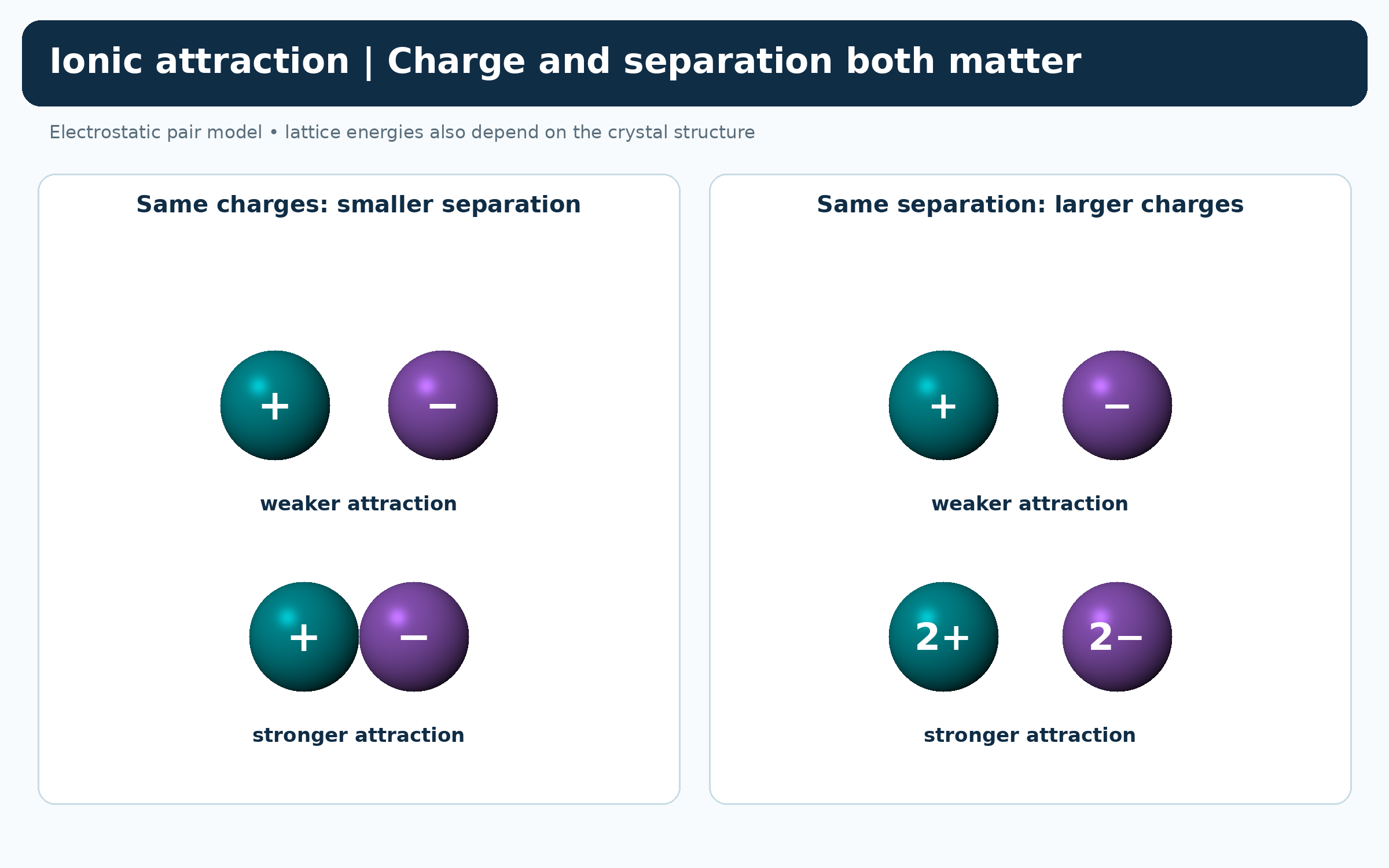
Charge and separation affect attraction
Charge and separation affect attraction
Pairs of ions compare stronger attraction at smaller separation and with larger charges.
Download original PNGAbout these representations
Symbolic shells and qualitative sizes, not a common measured-radius scale.