
Use outer-electron diagrams to compare ionic transfer, covalent sharing and a donated electron pair.
Choose from five images below. Open an image for a closer look, download its original PNG, or download all five as a ZIP.
Use these visuals in your lesson
Count electrons and total charge in each diagram; explain that dots and crosses record origins rather than different electron types.
A question to discuss
Why are all four N–H bonds equivalent once ammonium has formed?
Ionic and covalent bonding with electron diagrams: five teaching visuals
Teaching illustration
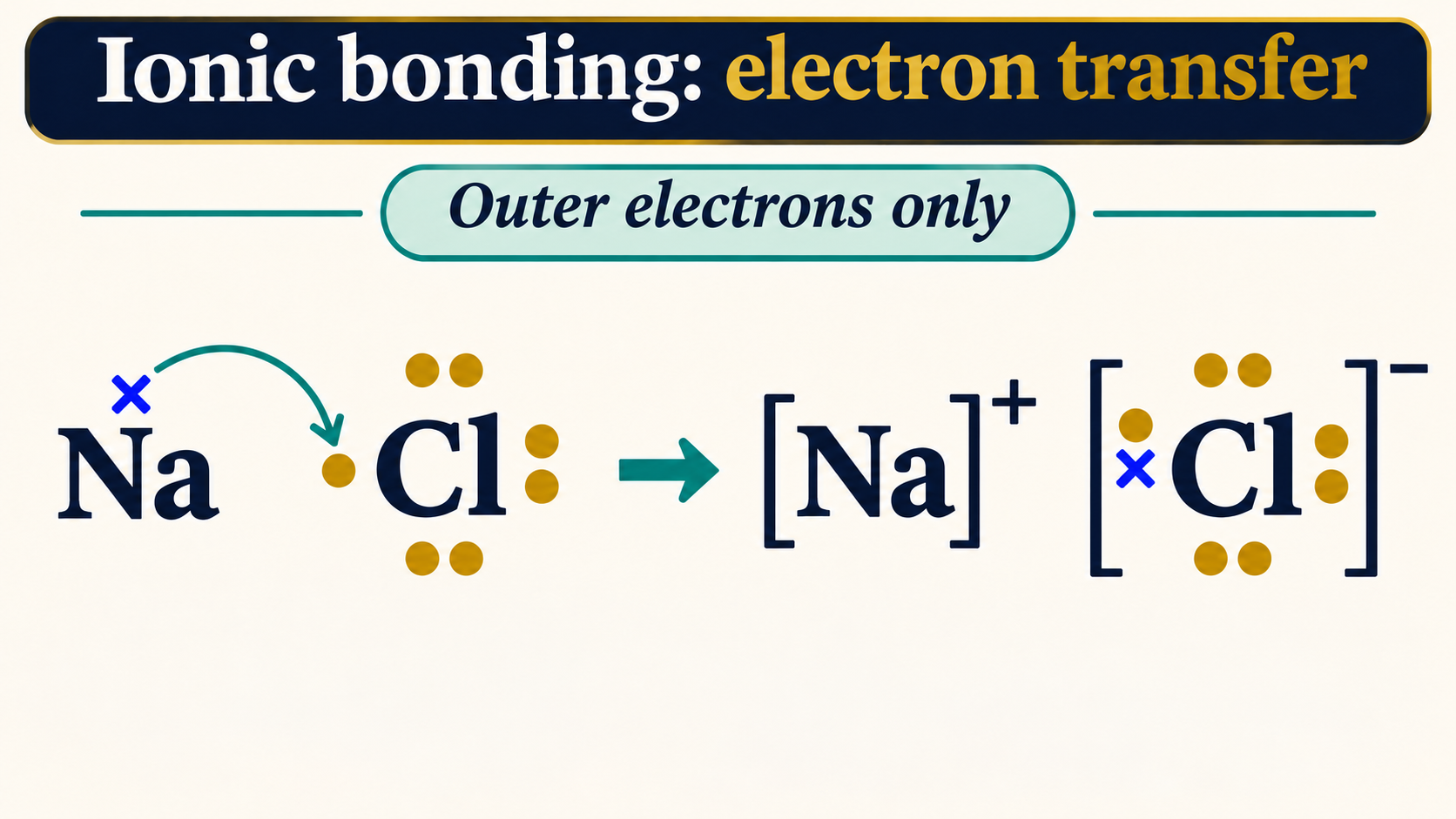
Electron transfer
Outer-electron diagrams show sodium transferring an electron and forming Na+ and Cl−.
Download original PNG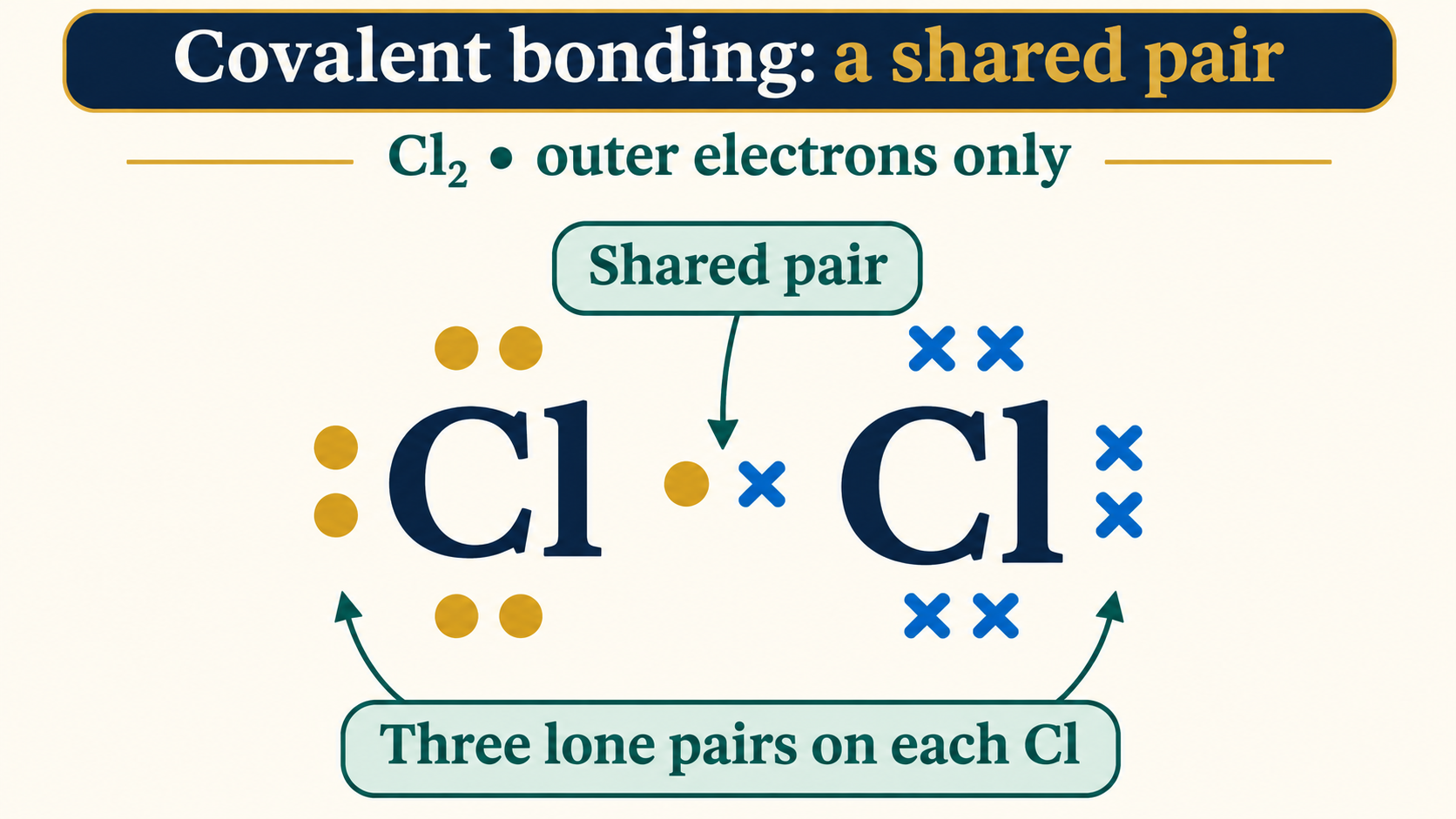
Teaching illustration
A shared pair
A chlorine molecule has one shared electron pair and three lone pairs on each atom.
Download original PNG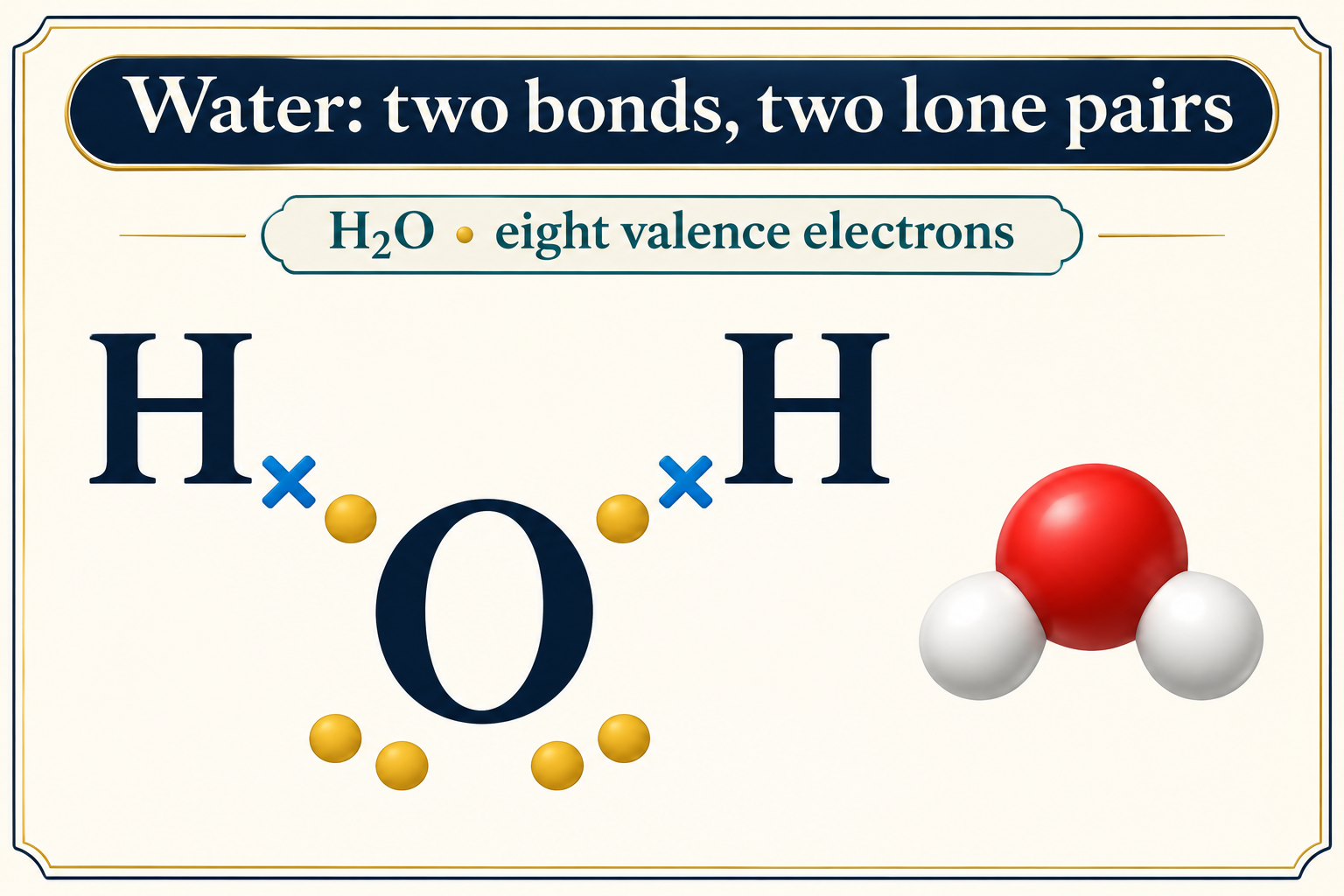
Teaching illustration
Water’s valence electrons
A water diagram shows two bonding pairs and two lone pairs around oxygen.
Download original PNG
Teaching illustration
A donated pair
Ammonia donates a lone pair to H+ to form ammonium with four equivalent N–H bonds.
Download original PNG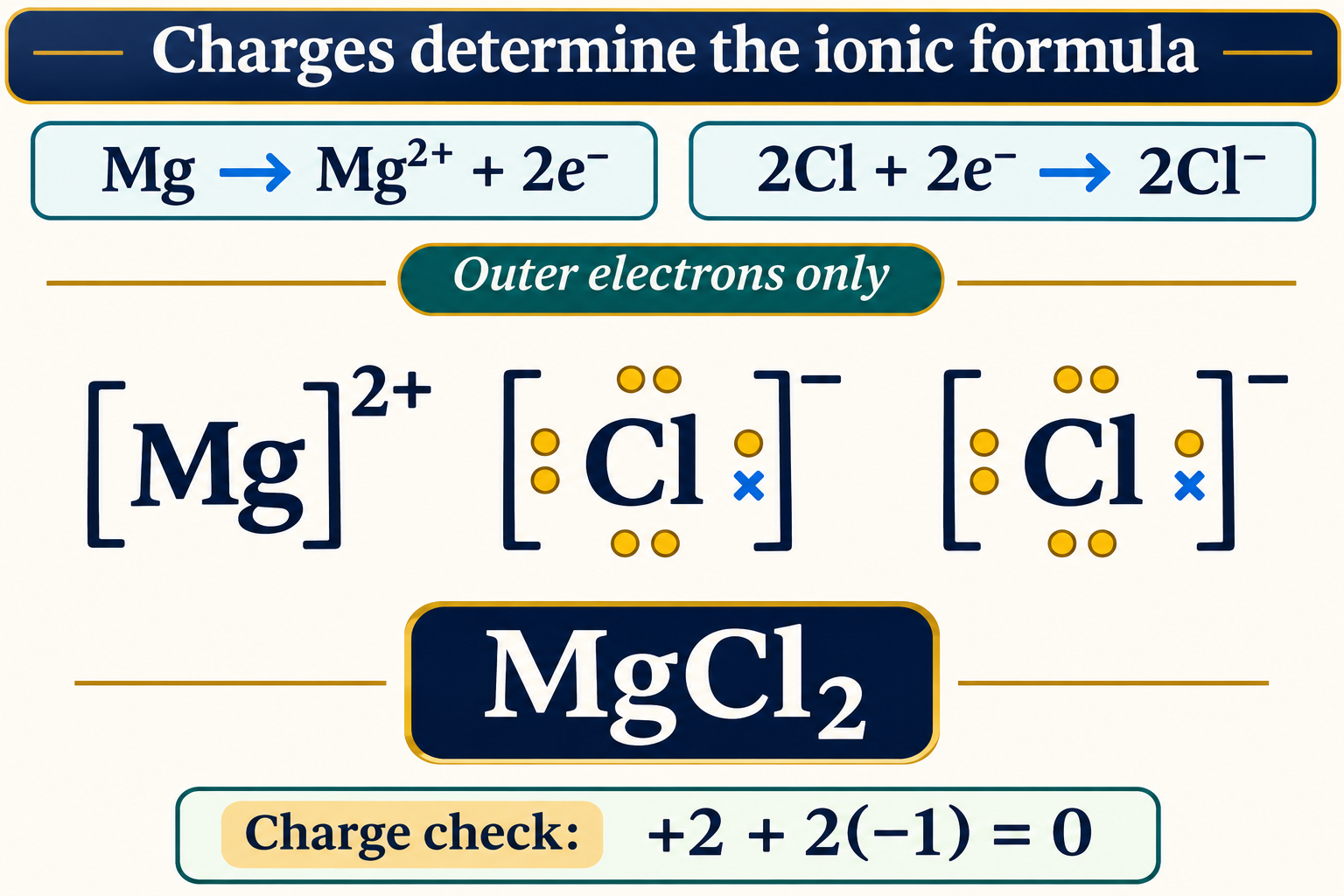
Teaching illustration
Charges determine the formula
Magnesium and chloride electron diagrams support MgCl2 and a zero total charge.
Download original PNGAbout these representations
Original teaching illustrations; symbolic particles and geometry are not calibrated measurements.