
Connect ethene’s planar structure with sigma bonding, pi overlap and restricted rotation.
Choose from five images below. Open an image for a closer look, download its original PNG, or download all five as a ZIP.
Use these visuals in your lesson
Use the twisting comparison to explain why rotation around a carbon–carbon double bond is restricted.
A question to discuss
What happens to pi overlap if one end of a double bond is twisted through 90°?
Sigma and pi bonding in ethene: five teaching visuals
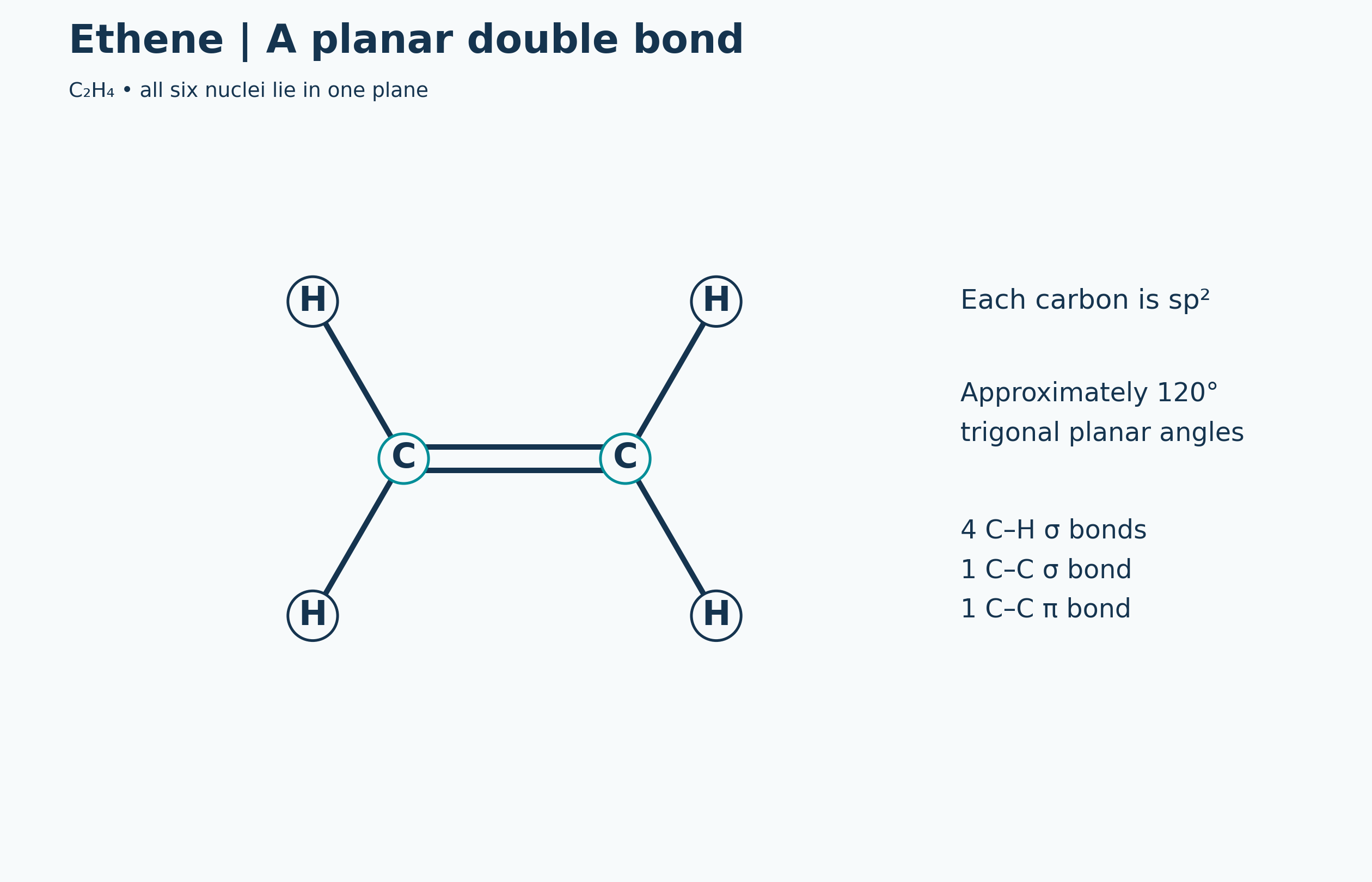
Idealised model
A planar double bond
An ethene formula shows the planar framework, approximate bond angles and sigma/pi bond count.
Download original PNG
Idealised model
One sigma and one pi bond
The molecular-plane sigma framework is compared with pi overlap above and below the plane.
Download original PNG
Idealised model
Sideways p-orbital overlap
Conceptual phase surfaces illustrate parallel p orbitals forming one pi bond.
Download original PNG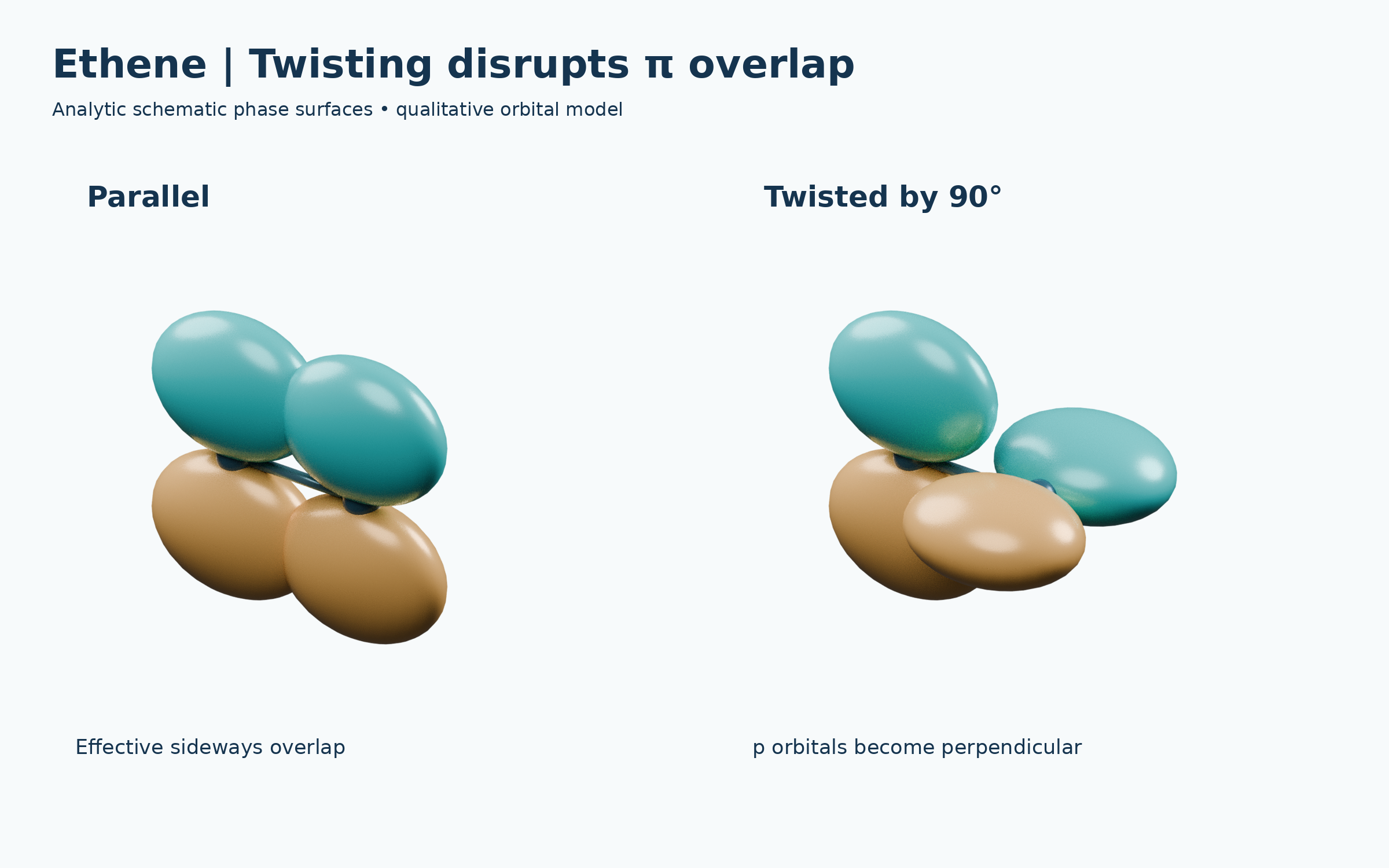
Idealised model
Twisting disrupts overlap
Parallel and 90°-twisted orbital models compare effective and disrupted sideways overlap.
Download original PNG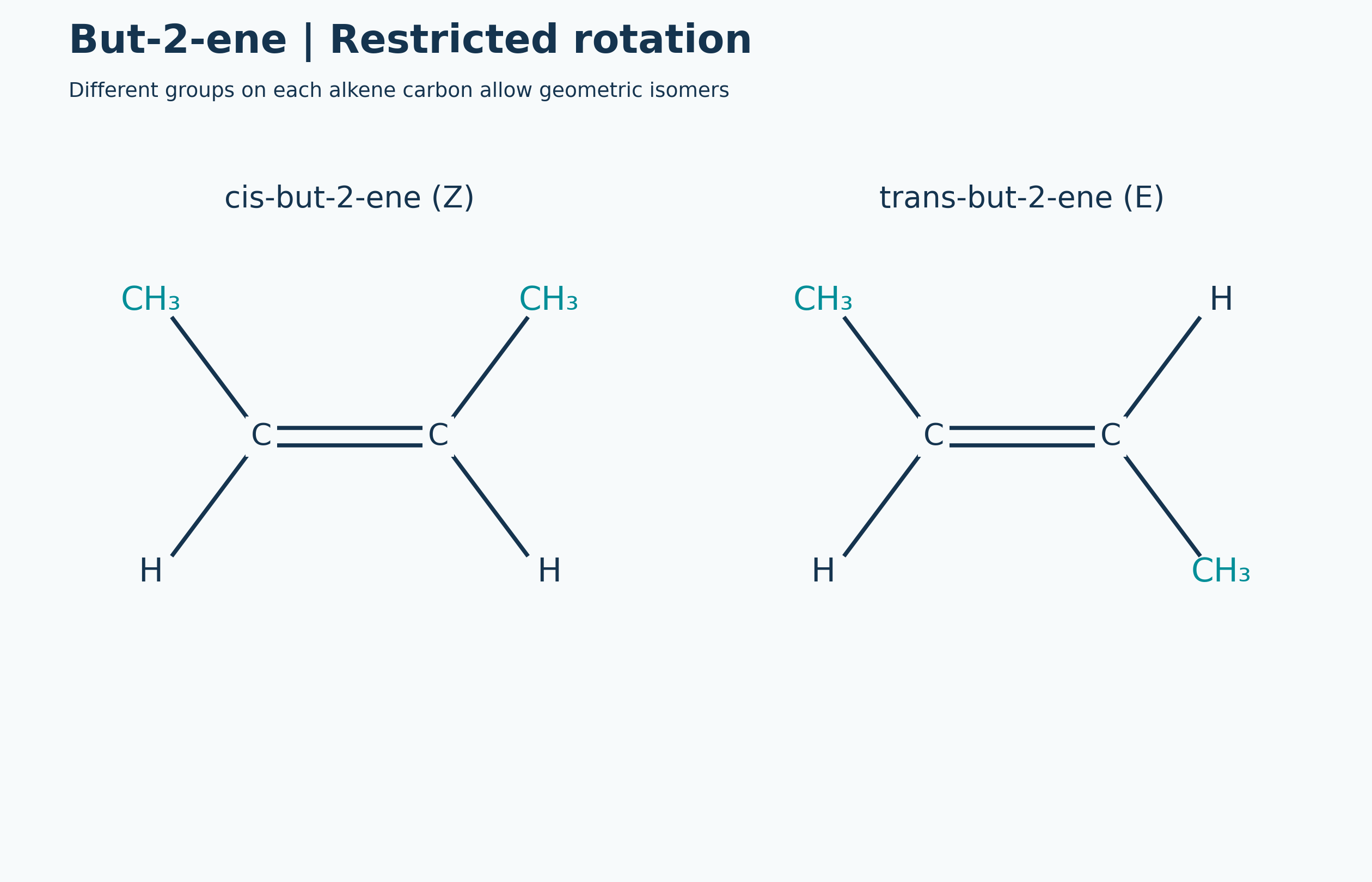
Idealised model
Restricted rotation and isomers
Cis and trans but-2-ene formulae connect restricted rotation with geometric isomerism.
Download original PNGAbout these representations
Analytical schematic phase surfaces and qualitative orbital models, not calculated molecular electron densities. The final panel uses but-2-ene to illustrate geometric isomerism.