
Filtration separates an insoluble solid from a liquid. Ordinary filter paper retains sand but does not remove dissolved sodium and chloride ions.
Choose from five images below. Open an image for a closer look, download its original PNG, or download all five as a ZIP.
Use these visuals in your lesson
Ask students to identify residue and filtrate, then explain why salt remains in the filtrate.
A question to discuss
Why is filtration unsuitable for recovering dissolved salt by itself?
Filtration apparatus: five teaching visuals
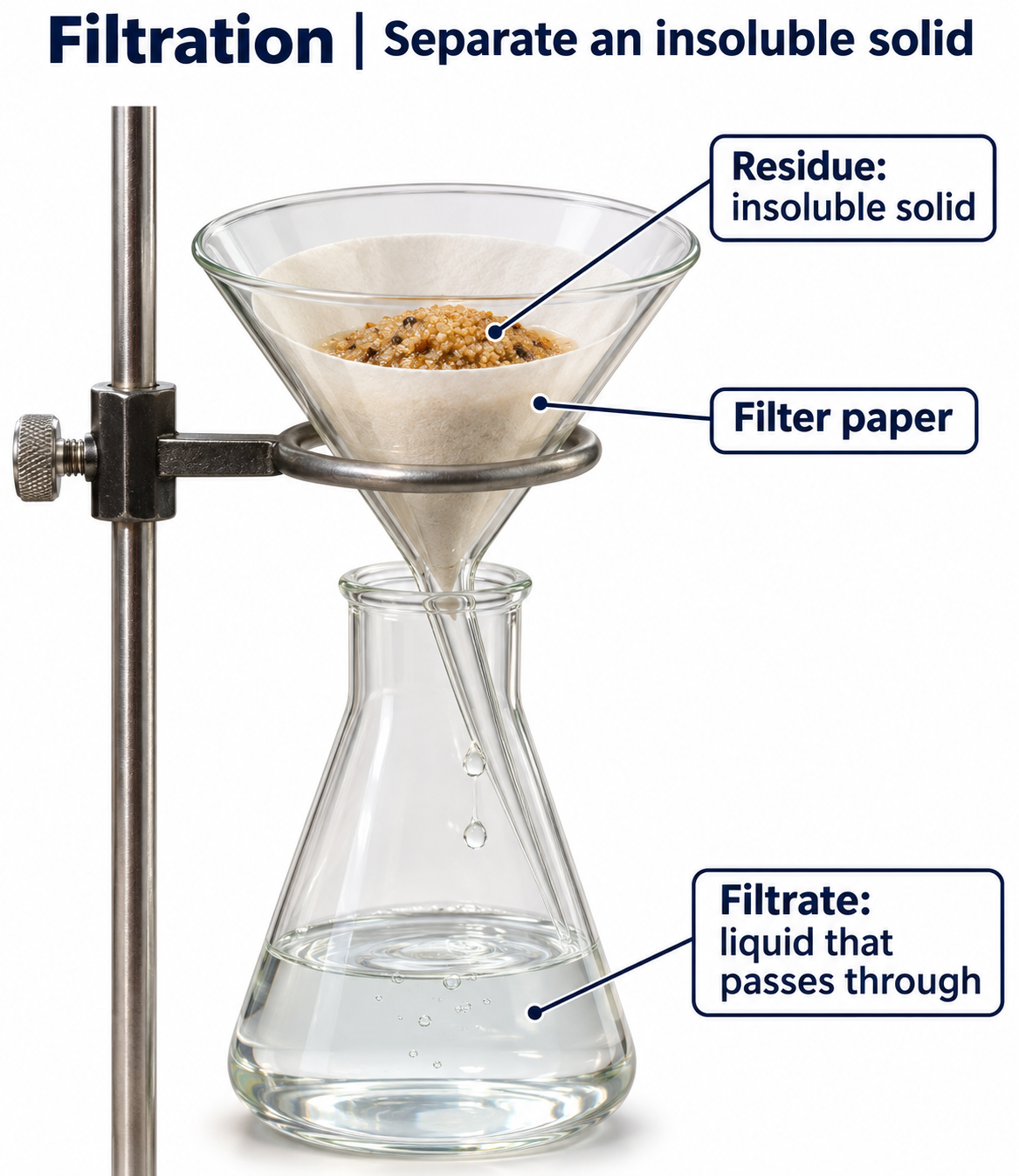
Residue and filtrate
Residue and filtrate
A funnel with filter paper retains insoluble solid while liquid collects in a flask.
Download original PNG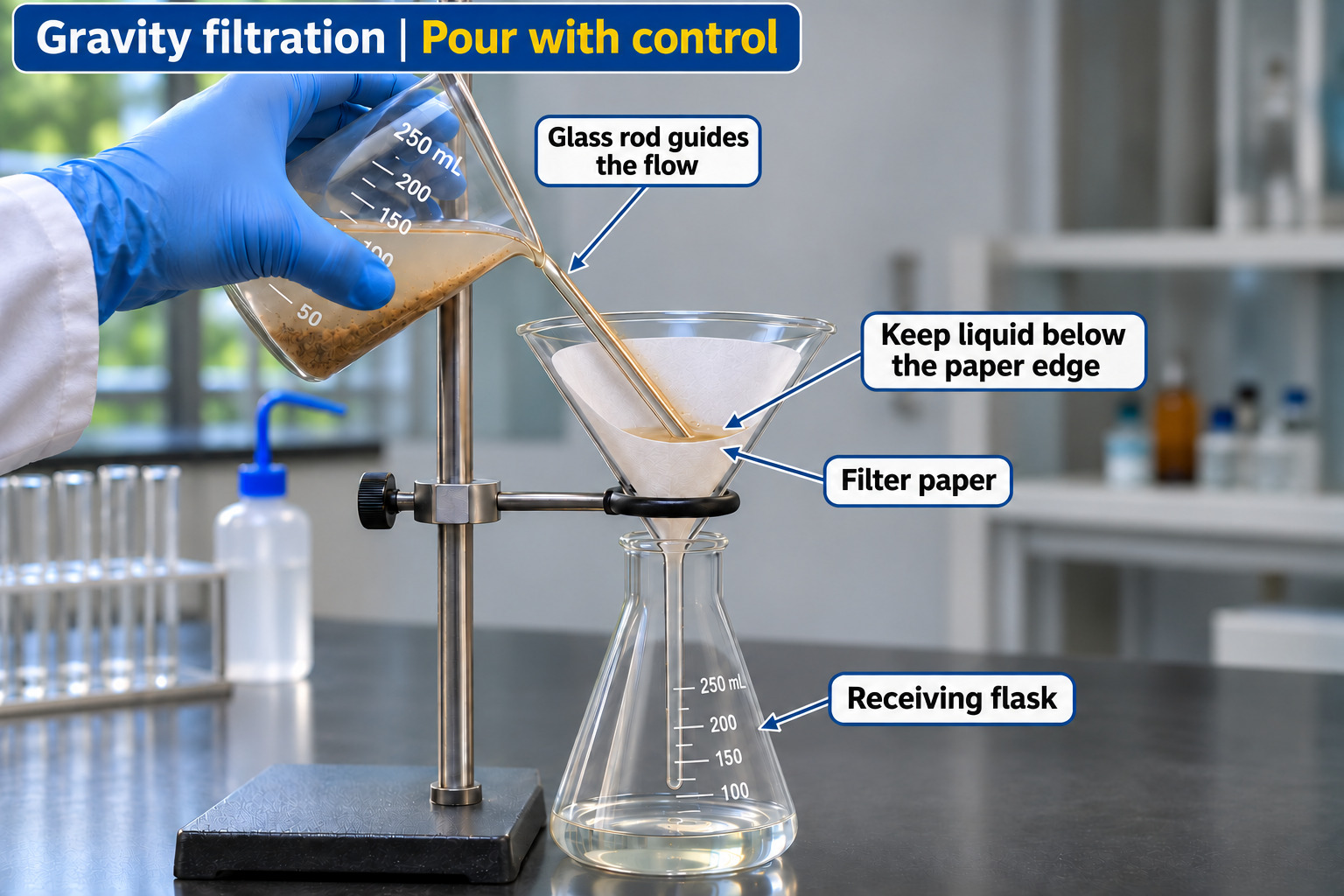
Controlled gravity filtration
Controlled gravity filtration
A glass rod guides liquid into a paper-lined funnel while the level stays below the paper edge.
Download original PNG
Sand stays, dissolved ions pass
Sand stays, dissolved ions pass
An apparatus view and conceptual inset show sand retained while sodium and chloride ions pass in solution.
Download original PNG
Gravity and vacuum filtration
Gravity and vacuum filtration
Side-by-side setups compare a paper-lined glass funnel with a Buchner funnel, vacuum-rated flask and trap.
Download original PNG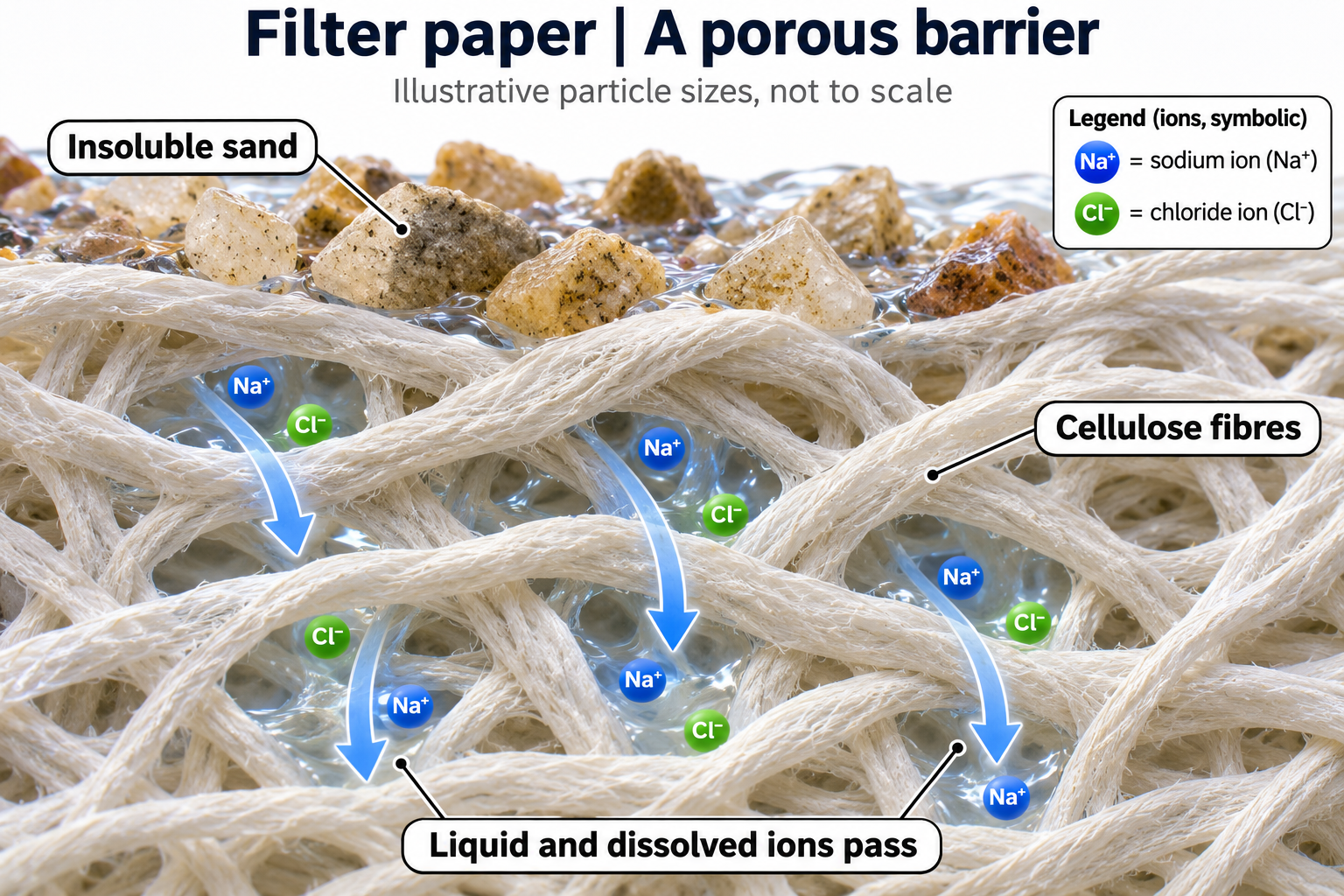
Filter paper as a porous barrier
Filter paper as a porous barrier
A conceptual fibre view shows sand retained while liquid and dissolved ions pass through gaps.
Download original PNGAbout these representations
Teaching apparatus illustrations and symbolic particles; pore and ion sizes are not to scale.