
Displayed, condensed and skeletal formulae can describe the same connectivity. Reading skeletal notation means restoring implied carbon atoms and their hydrogens.
Choose from five images below. Open an image for a closer look, download its original PNG, or download all five as a ZIP.
Use these visuals in your lesson
Translate one representation into another, then count every atom to check the molecular formula.
A question to discuss
Which hydrogens are omitted in skeletal notation, and which are shown?
Displayed, condensed and skeletal formulae: five teaching visuals

Three views of butan-2-ol
Three views of butan-2-ol
Displayed, condensed and skeletal formulae represent the same C4H10O molecule.
Download original PNG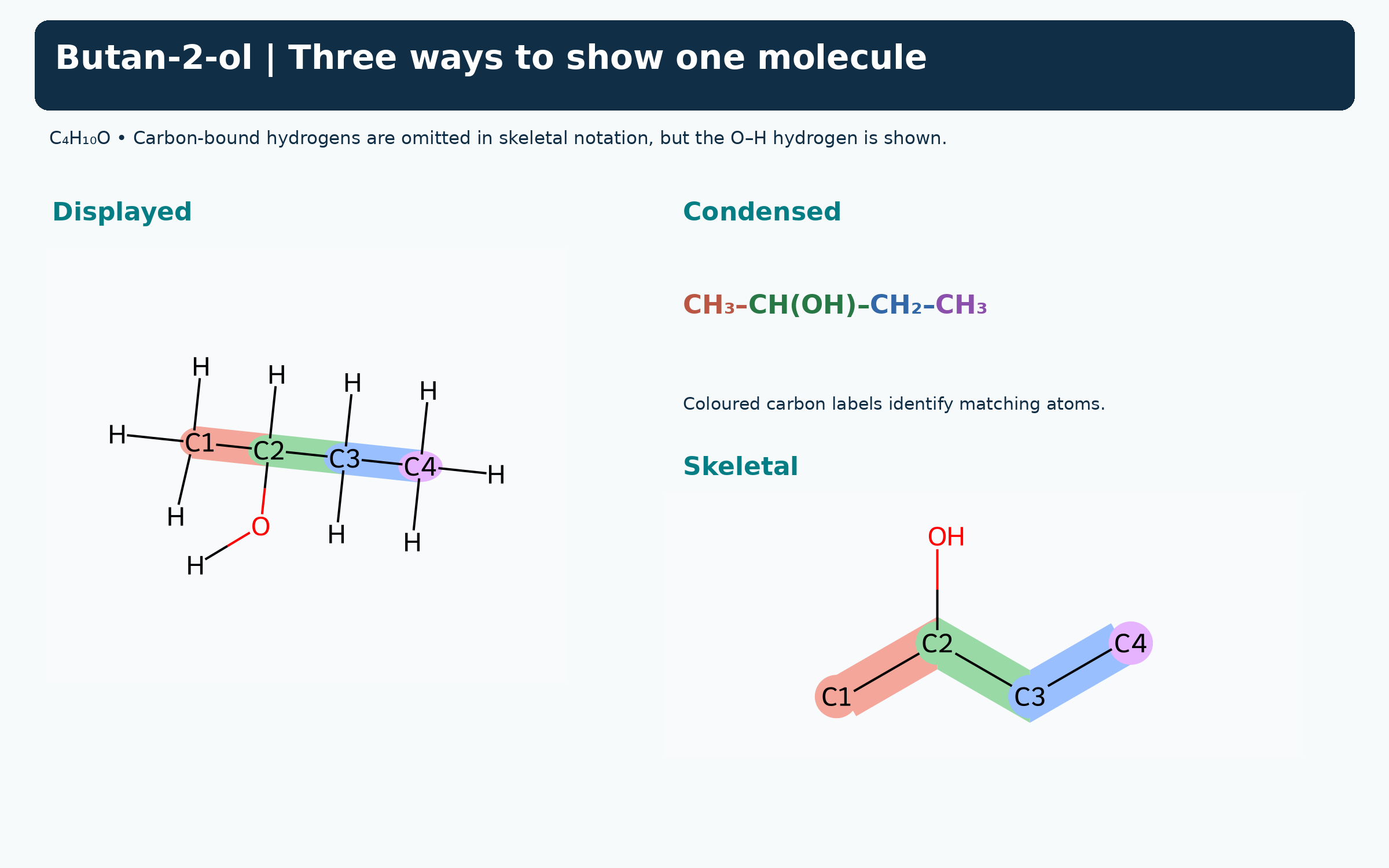
Matching carbon atoms between formulae
Matching carbon atoms between formulae
Colour-coded carbons connect the three representations of butan-2-ol.
Download original PNG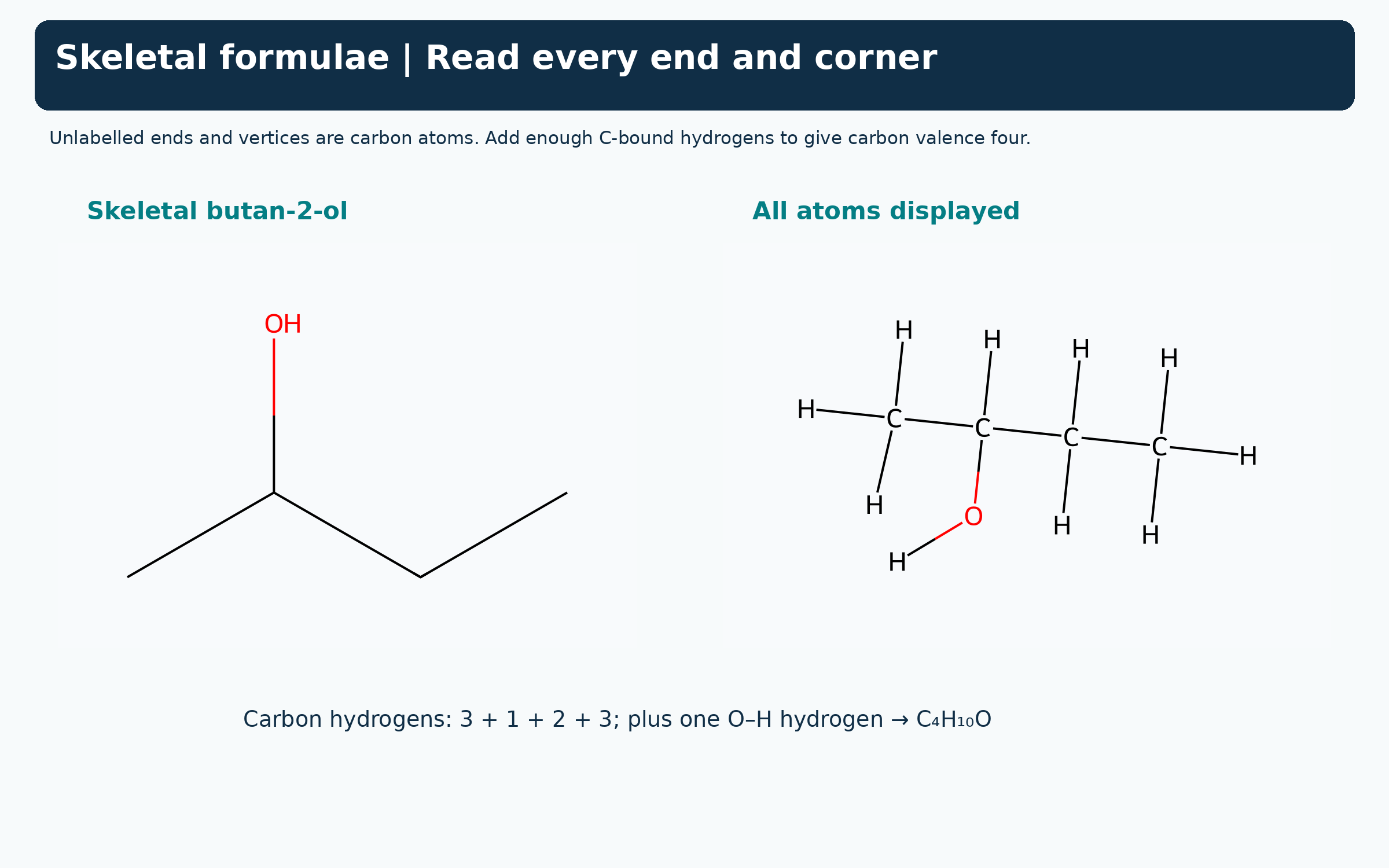
Reading skeletal ends and corners
Reading skeletal ends and corners
Skeletal and fully displayed butan-2-ol illustrate implied carbons and the hydrogen count.
Download original PNG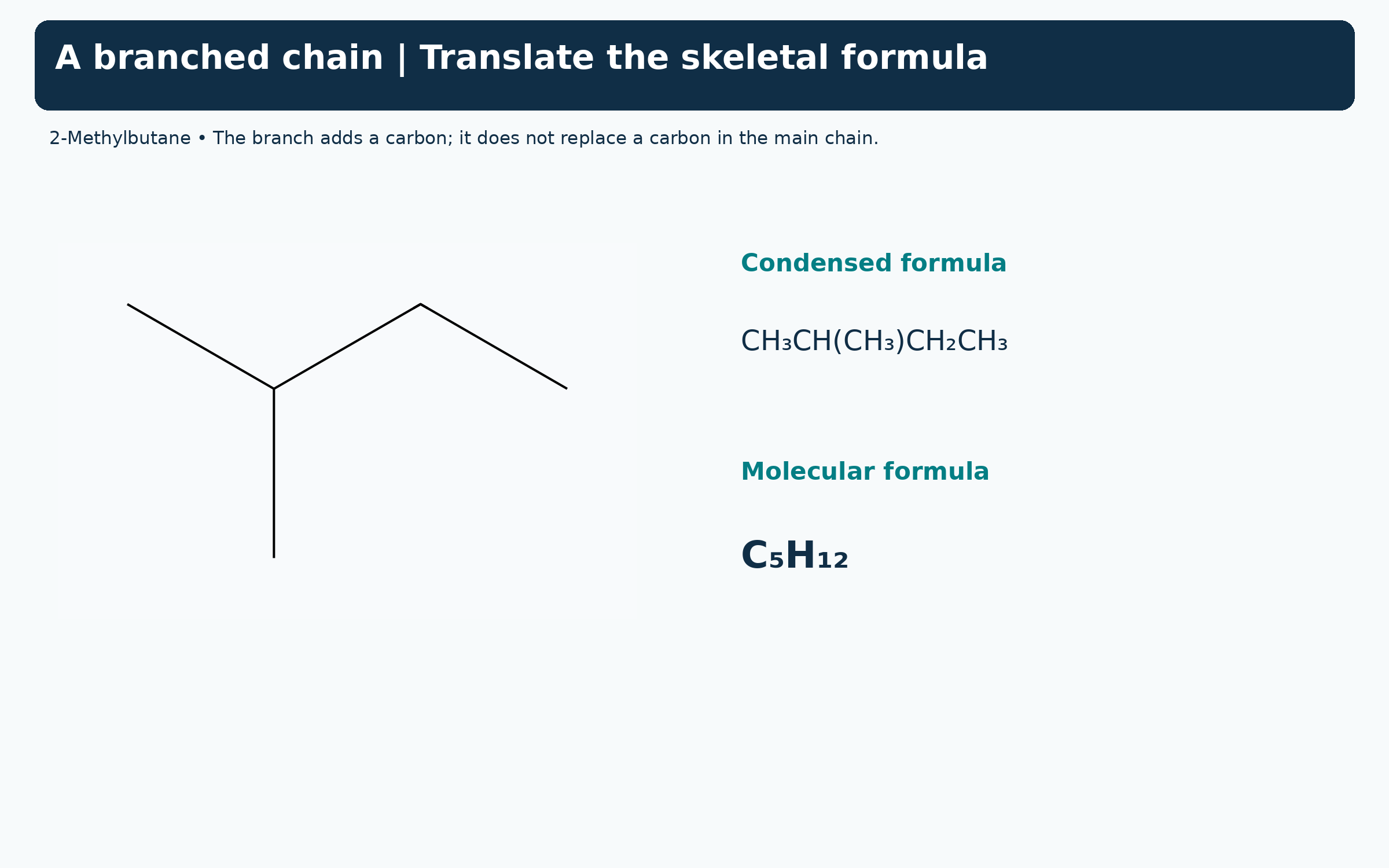
A branched chain example
A branched chain example
Skeletal 2-methylbutane is paired with its condensed formula and molecular formula C5H12.
Download original PNG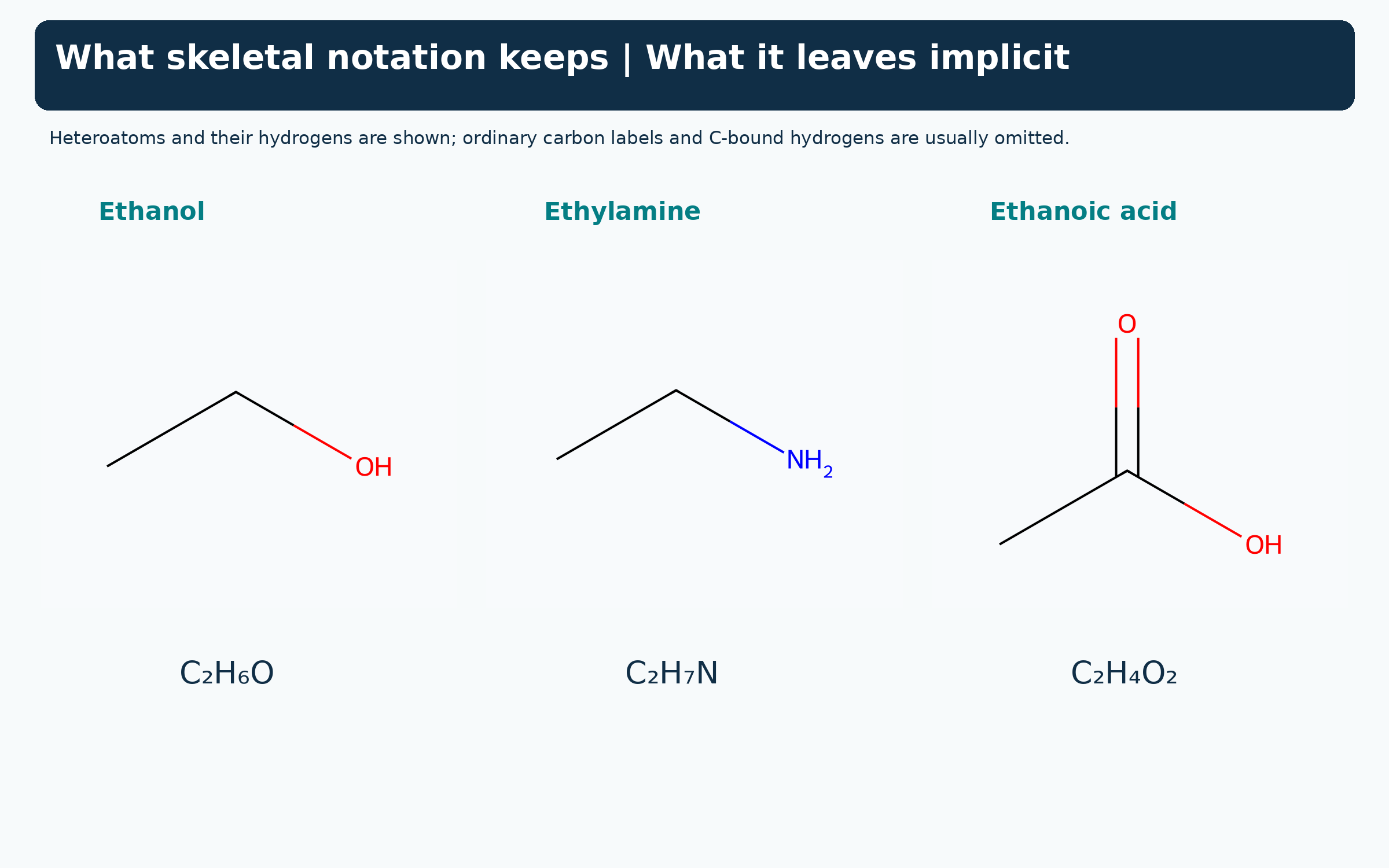
What skeletal notation retains
What skeletal notation retains
Ethanol, ethylamine and ethanoic acid show labelled heteroatoms and their attached hydrogens.
Download original PNGAbout these representations
RDKit-generated structures with explicit hydrogens for displayed formulae.