
Functional groups help us recognise recurring structures and reaction patterns. The atoms beside a carbonyl distinguish several families that can otherwise look similar.
Choose from five images below. Open an image for a closer look, download its original PNG, or download all five as a ZIP.
Use these visuals in your lesson
Cover the names and ask students to identify each group from its atom connections, not the overall chain shape.
A question to discuss
What makes an amide different from an amine?
Organic functional groups: five teaching visuals
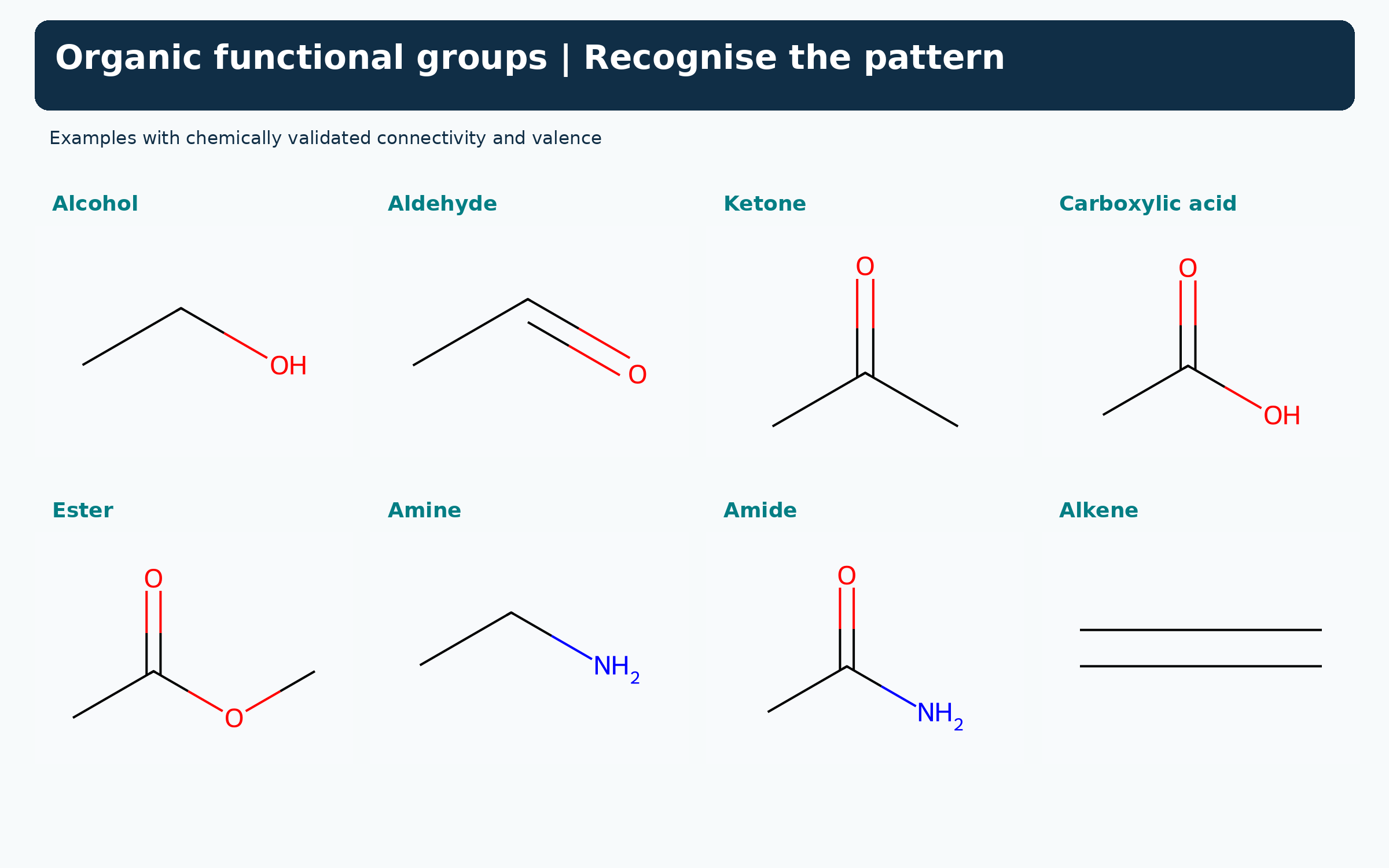
Recognising eight functional groups
Recognising eight functional groups
Structures show alcohol, aldehyde, ketone, carboxylic acid, ester, amine, amide and alkene examples.
Download original PNG
Highlighting the defining atoms
Highlighting the defining atoms
The same eight examples highlight the atoms or bond that define each functional group.
Download original PNG
Amine compared with amide
Amine compared with amide
Displayed methylamine and ethanamide compare a nitrogen without and with an adjacent carbonyl carbon.
Download original PNG
Carbonyl groups with different neighbours
Carbonyl groups with different neighbours
Displayed aldehyde, ketone, carboxylic acid, ester and amide examples show the groups attached to C=O.
Download original PNG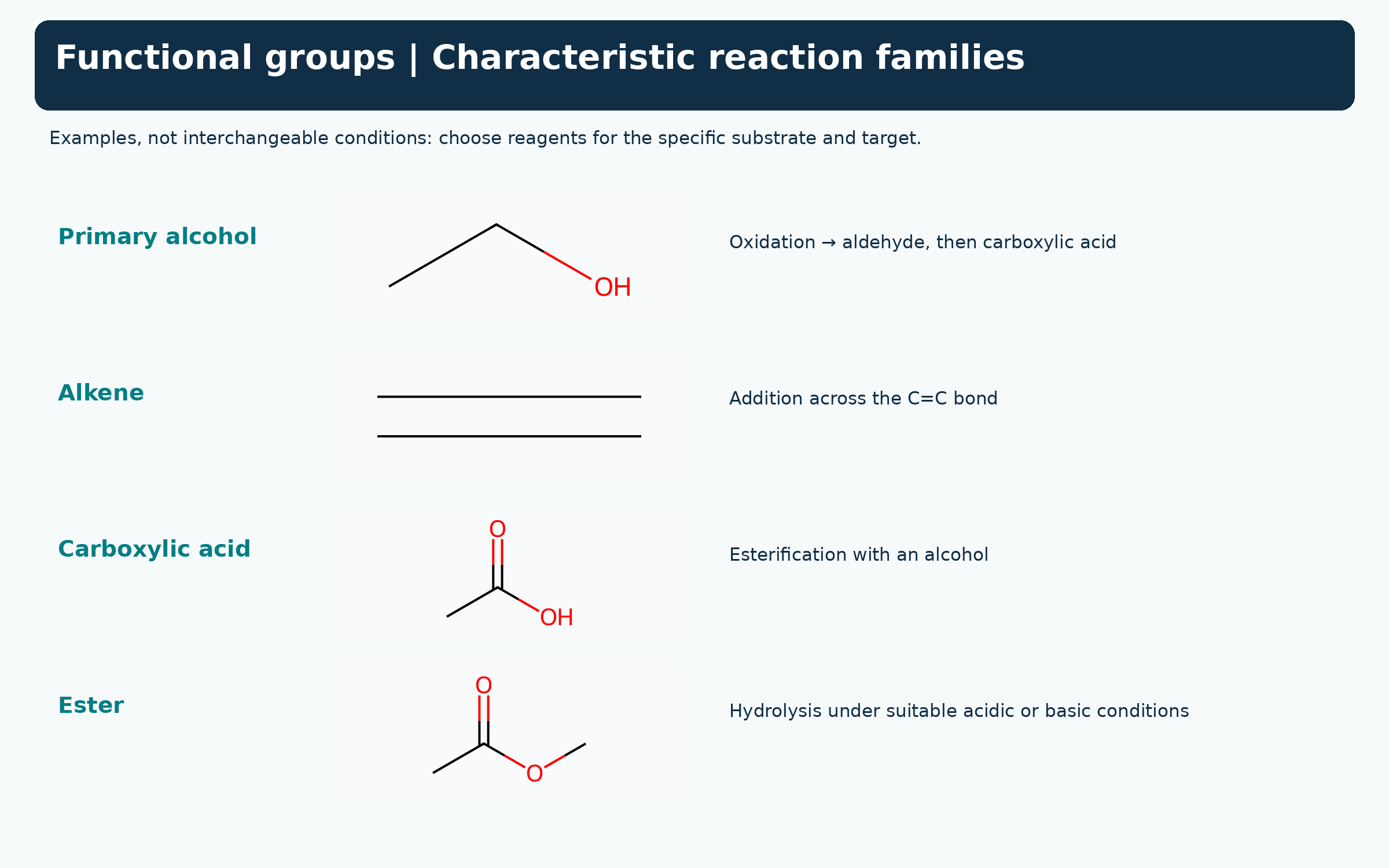
Functional groups and reaction families
Functional groups and reaction families
Selected alcohol, alkene, carboxylic acid and ester examples link to characteristic reaction types.
Download original PNGAbout these representations
RDKit-sanitised molecular connectivity and valence used for the drawn structures.