
Gas pressure is the average force per unit area arising from particle collisions with walls. Ideal-gas comparisons explain changes with volume and temperature.
Choose from five images below. Open an image for a closer look, download its original PNG, or download all five as a ZIP.
Use these visuals in your lesson
Ask students to state which variables stay fixed before predicting a pressure change.
A question to discuss
Why does doubling the wall area not necessarily change the pressure?
Gas pressure from particle collisions: five teaching visuals
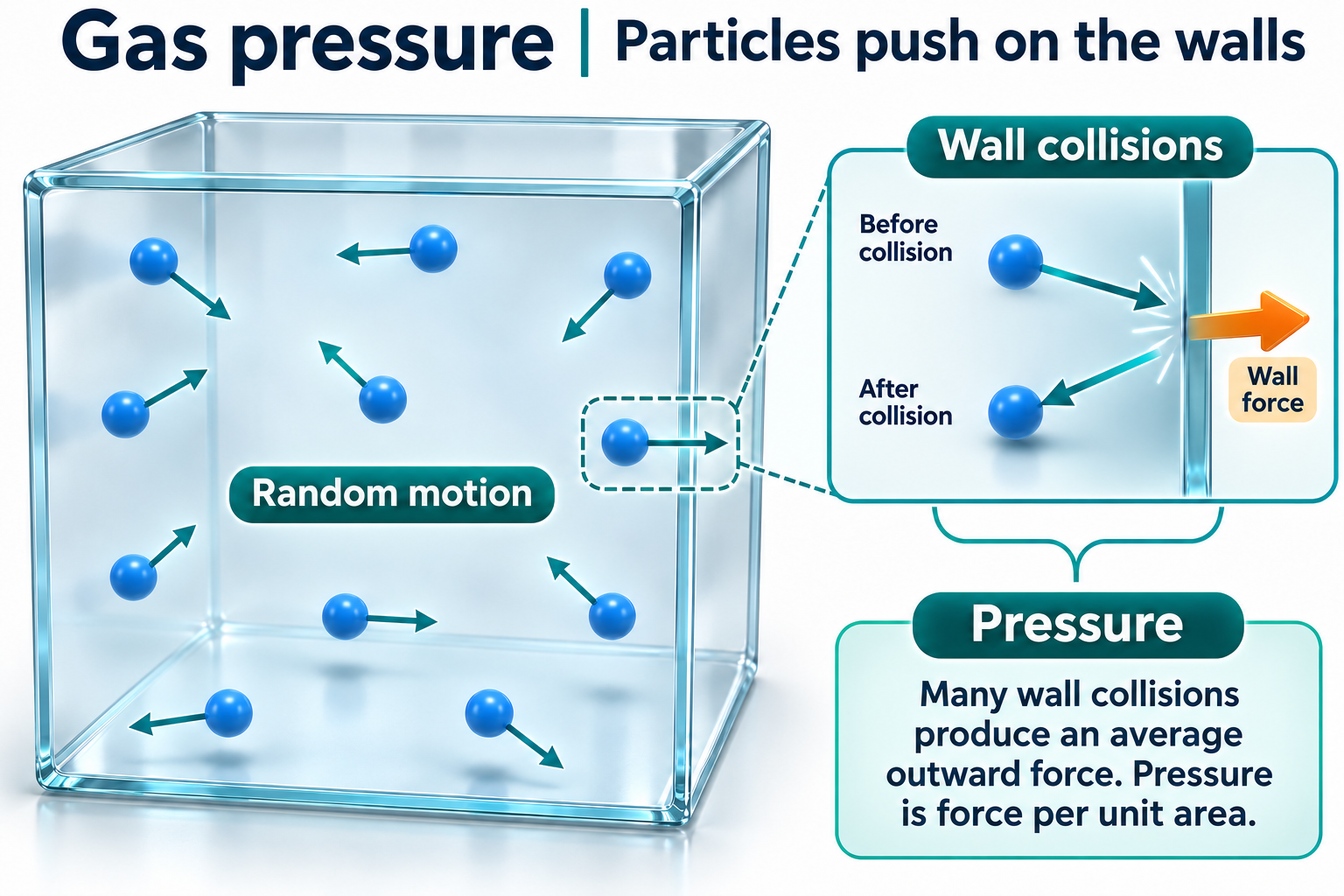
Particles collide with walls
Particles collide with walls
Moving particles in a container and a wall-collision inset link random motion to pressure.
Download original PNG
Momentum change at a wall
Momentum change at a wall
Before, during and after views show an ideal elastic collision and equal opposite forces on particle and wall.
Download original PNG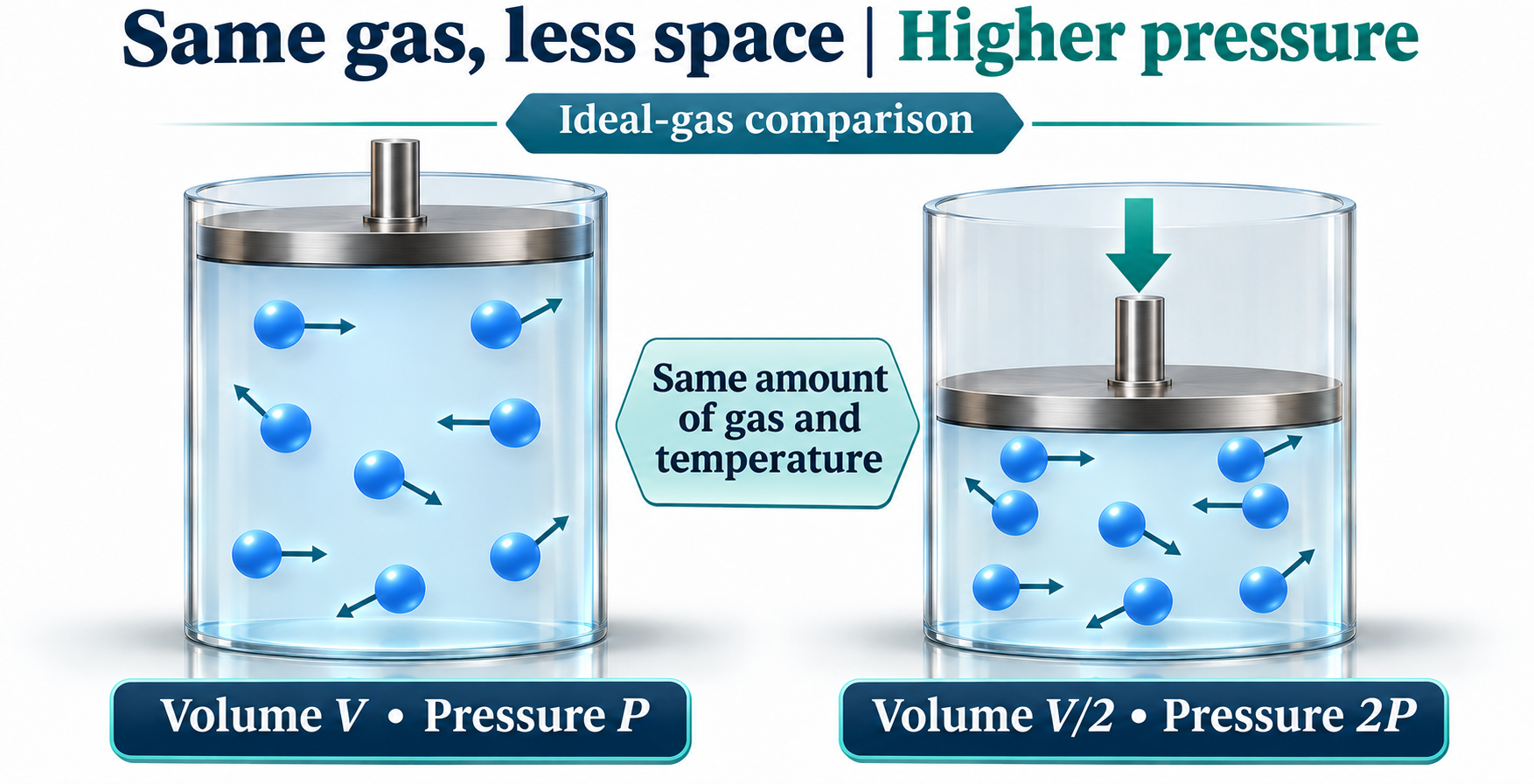
Compressing a fixed amount of gas
Compressing a fixed amount of gas
At the same temperature, halving volume doubles ideal-gas pressure.
Download original PNG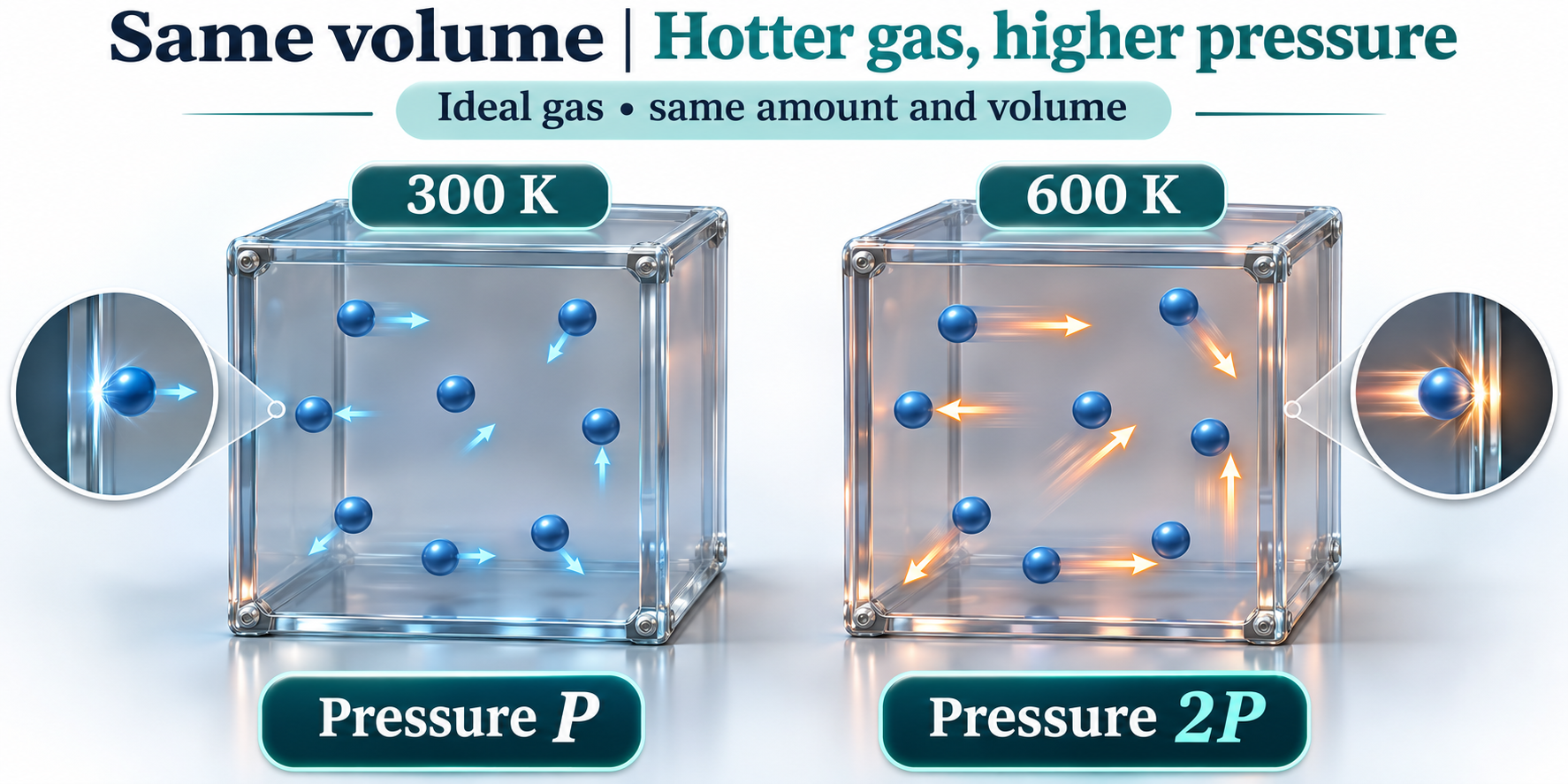
Heating gas at fixed volume
Heating gas at fixed volume
A fixed amount of ideal gas at 300 K and 600 K illustrates doubled pressure at doubled absolute temperature.
Download original PNG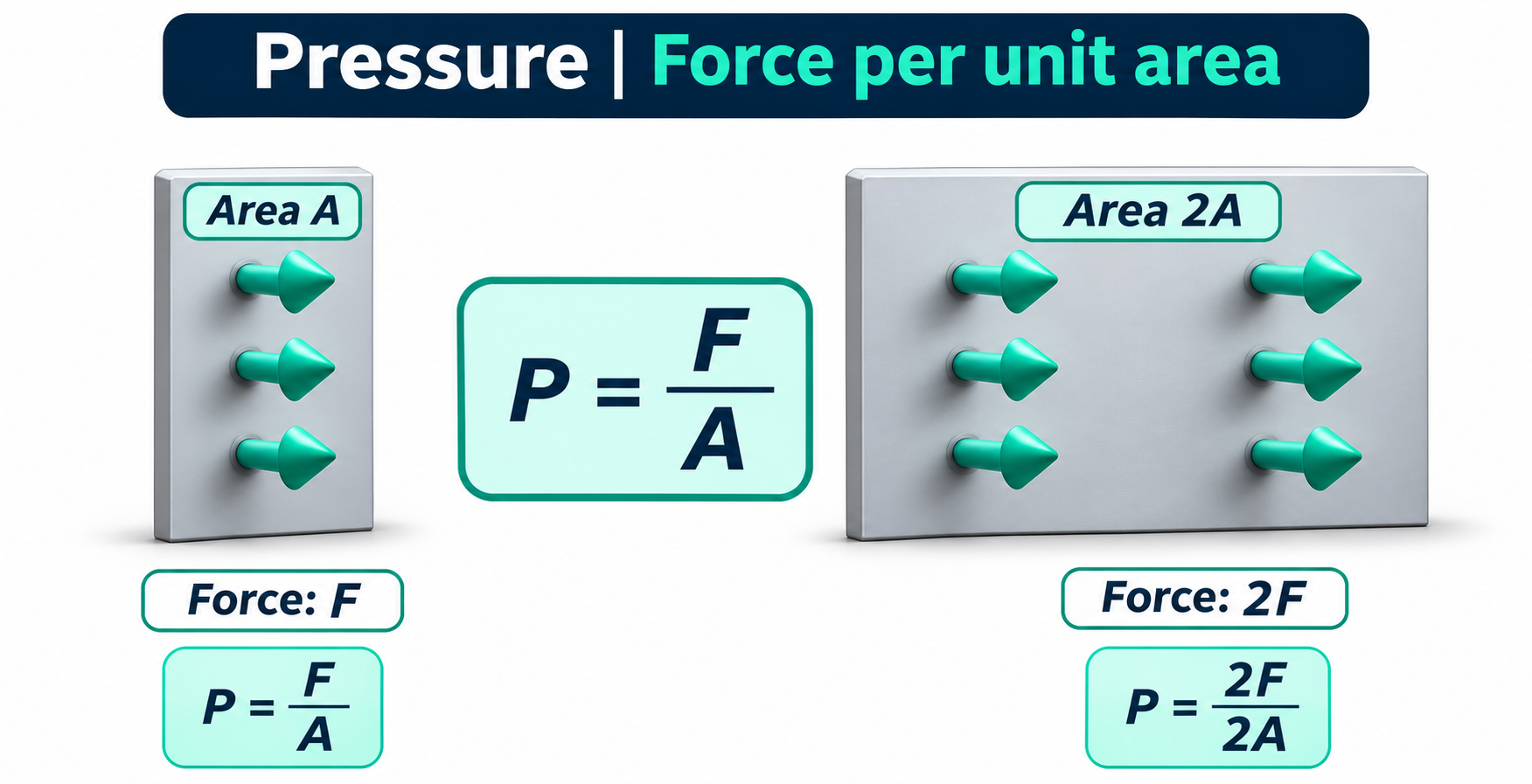
Pressure is force per unit area
Pressure is force per unit area
Areas A and 2A receive forces F and 2F, illustrating equal pressure in both cases.
Download original PNGAbout these representations
Ideal-gas particle models and qualitative collisions, not measured molecular trajectories.