
Reaction rate depends on successful collisions, not simply the presence of reactants. The set compares concentration, temperature, surface area and catalysis.
Choose from five images below. Open an image for a closer look, download its original PNG, or download all five as a ZIP.
Use these visuals in your lesson
For each comparison, identify the changed variable and explain its effect on successful collisions.
A question to discuss
How can a catalyst increase rate without changing the reaction enthalpy?
Reaction rate factors: five teaching visuals
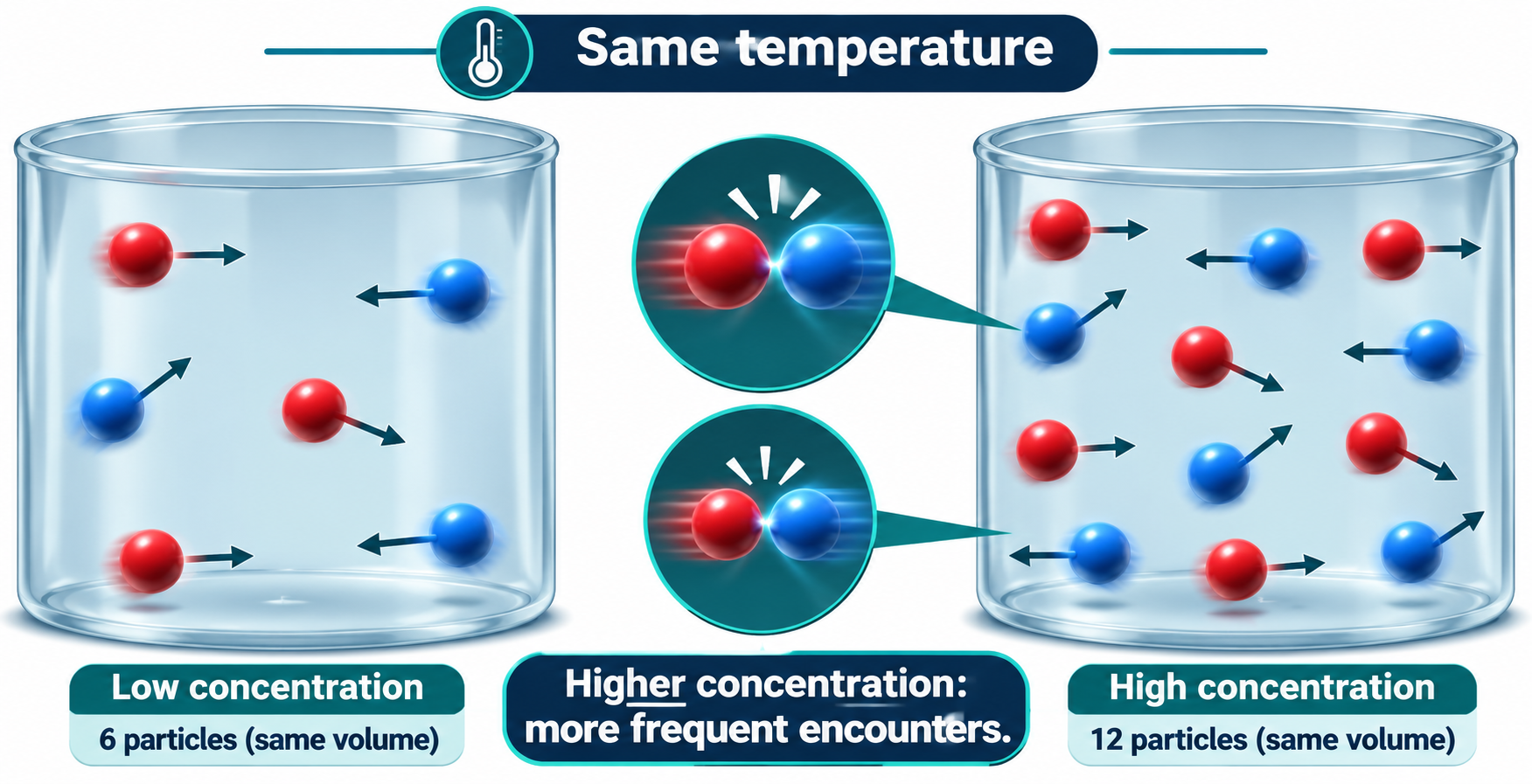
Concentration and encounters
Concentration and encounters
Equal-volume containers with six and twelve particles illustrate more frequent encounters at higher concentration.
Download original PNG
Temperature and particle energy
Temperature and particle energy
Particle views and schematic energy distributions show a greater fraction above the activation barrier at higher temperature.
Download original PNG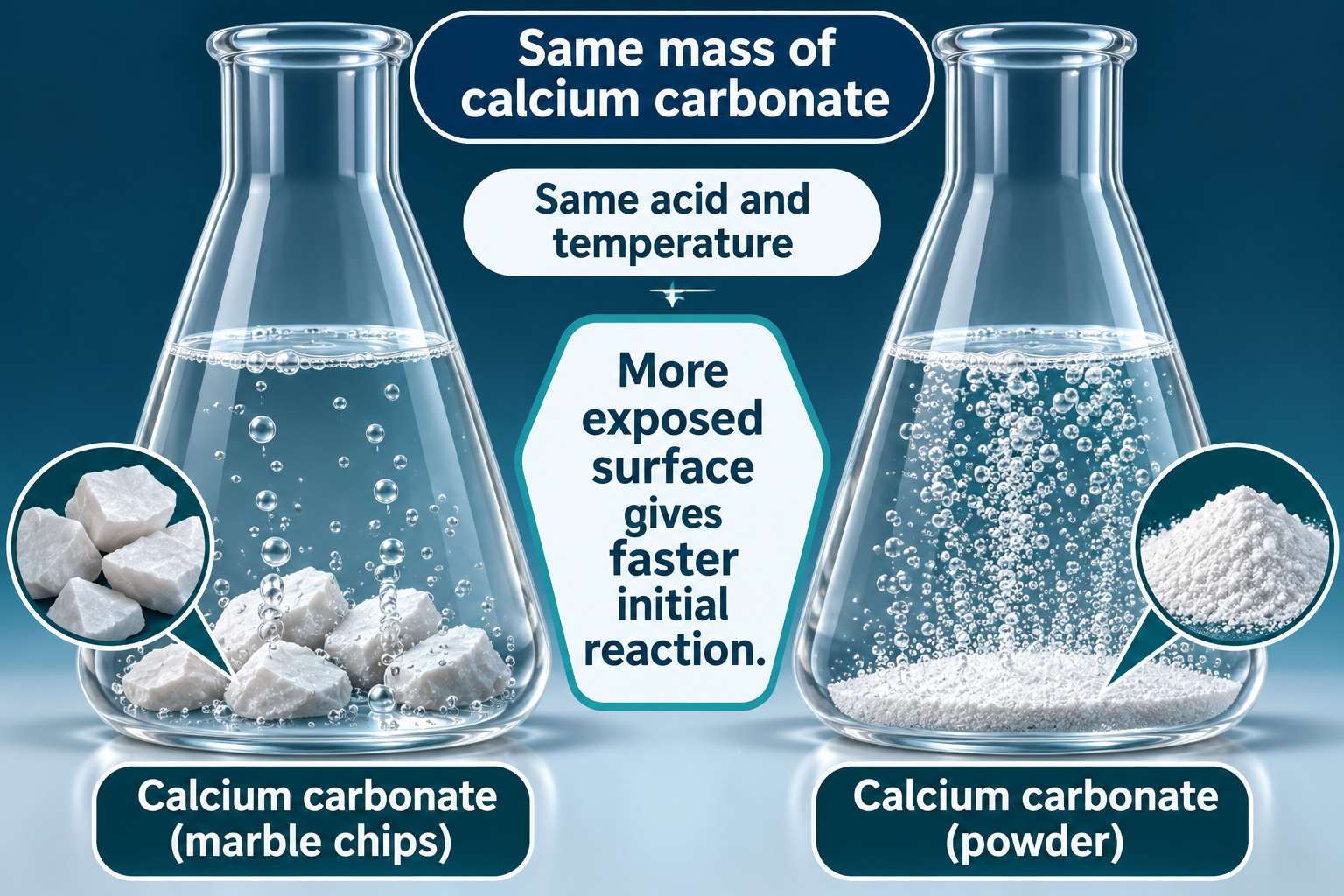
Surface area and initial rate
Surface area and initial rate
Equal masses of calcium carbonate chips and powder react with the same acid, with more exposed surface in the powder.
Download original PNG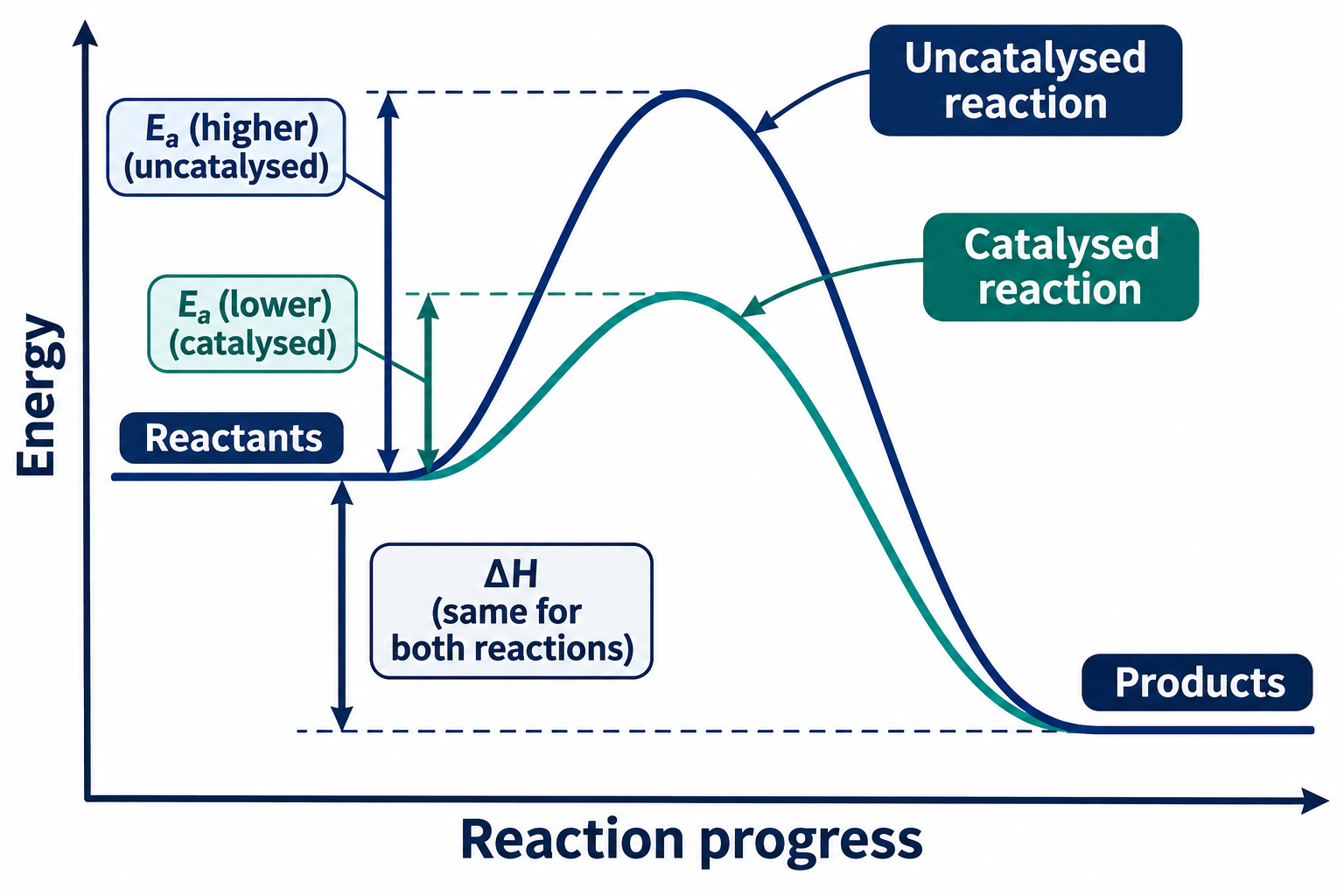
A lower activation barrier
A lower activation barrier
Catalysed and uncatalysed profiles share reactant and product energies but have different activation barriers.
Download original PNG
Successful and unsuccessful collisions
Successful and unsuccessful collisions
Generic A2 and B2 particles bounce apart at insufficient energy or form two AB particles in a successful collision.
Download original PNGAbout these representations
Qualitative collision theory and energy profiles, not measured rate data or a specified molecular mechanism.