
Compare electron-domain arrangements and molecular shapes, then connect shape with polarity.
Choose from five images below. Open an image for a closer look, download its original PNG, or download all five as a ZIP.
Use these visuals in your lesson
Count electron domains first, then name the shape from the positions of atoms. Use the water comparison to keep lone pairs separate from bonded atoms.
A question to discuss
Why do methane, ammonia and water have different molecular shapes despite each having four electron domains?
VSEPR molecular shapes: five teaching visuals
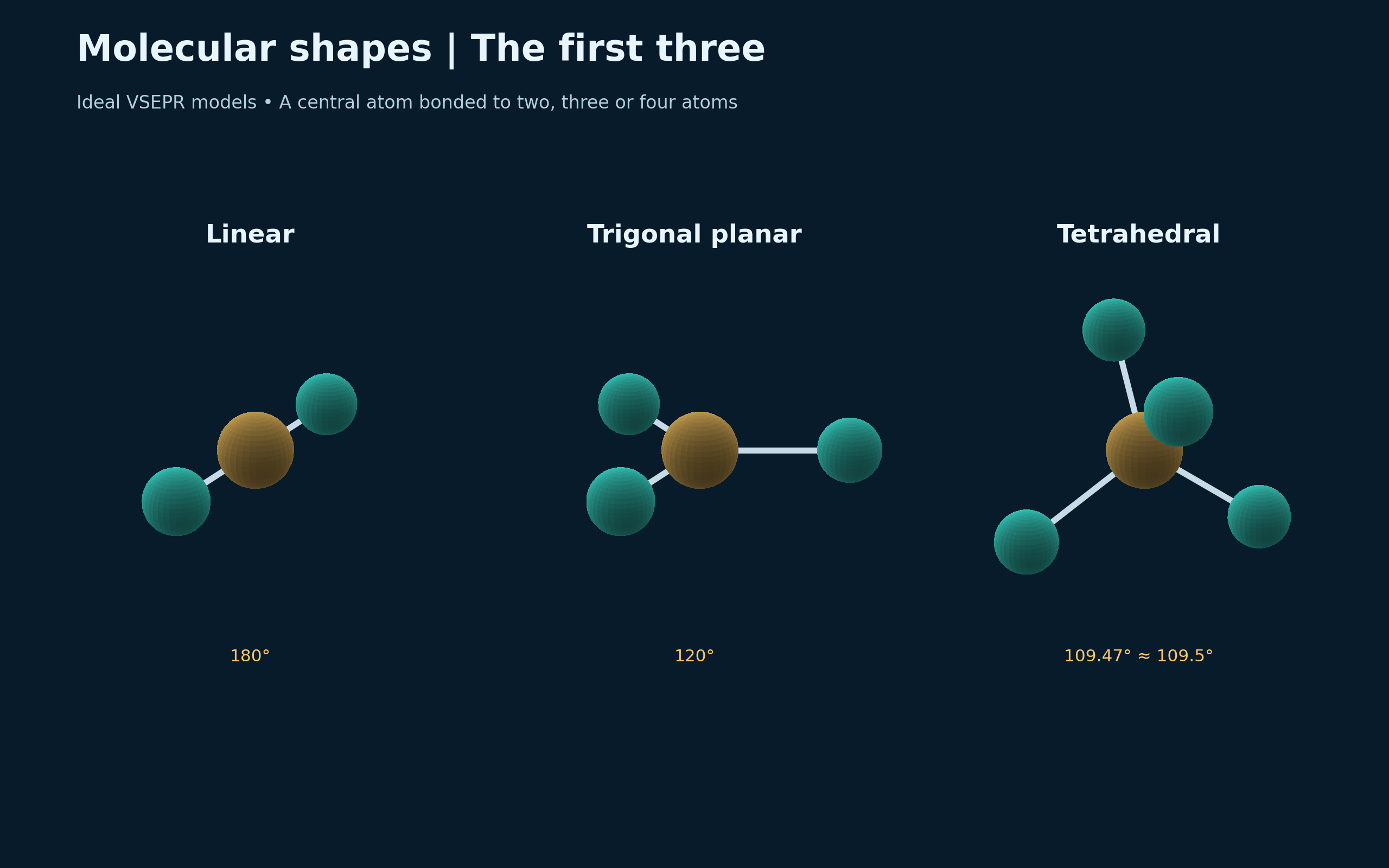
Idealised model
The first three shapes
Ideal models compare linear, trigonal planar and tetrahedral shapes with their bond angles.
Download original PNG
Idealised model
Five electron-domain arrangements
Models compare two through six electron domains: linear, trigonal planar, tetrahedral, trigonal bipyramidal and octahedral.
Download original PNG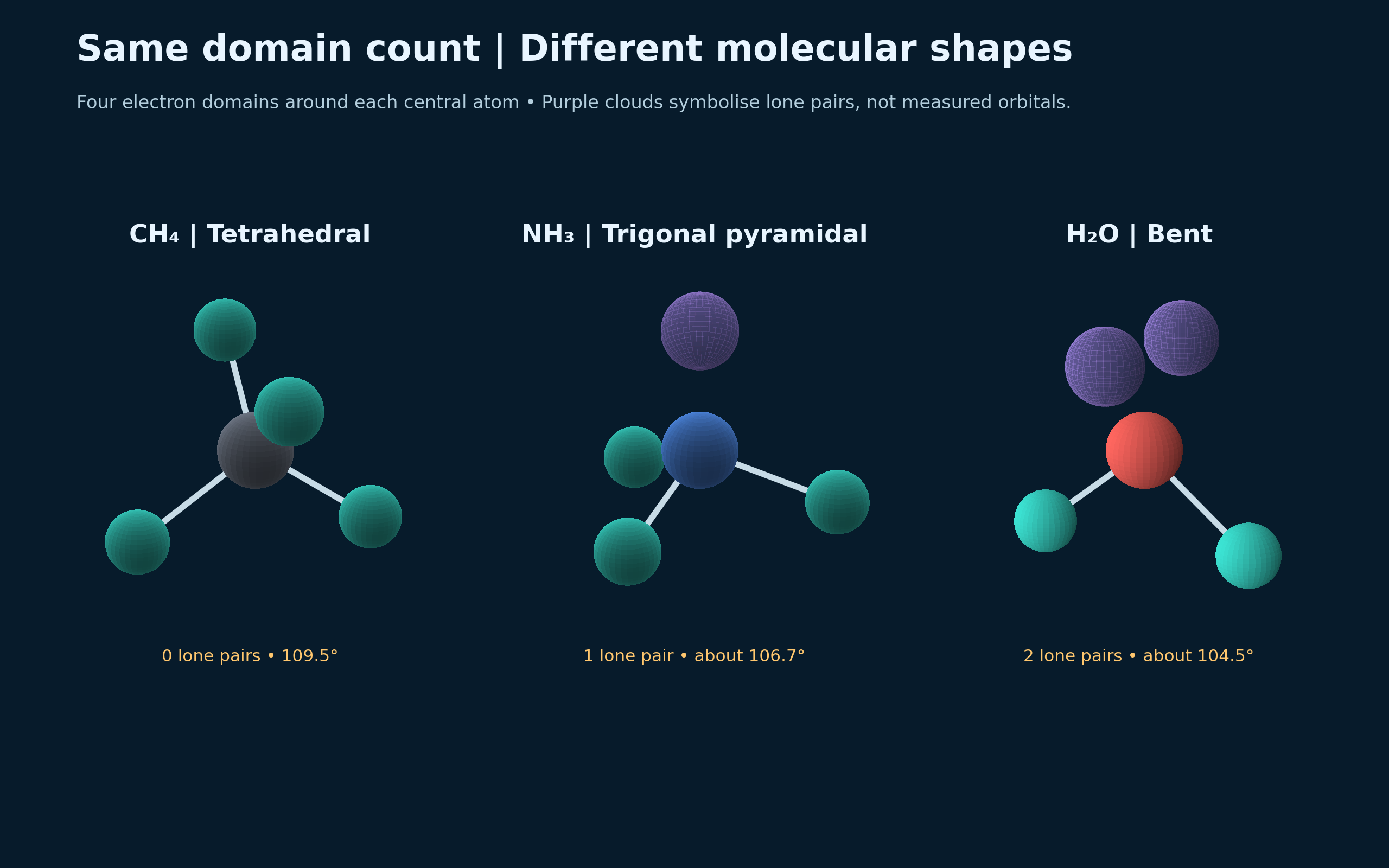
Idealised model
Same domain count, different shapes
Methane, ammonia and water illustrate the effect of lone pairs on molecular shape.
Download original PNG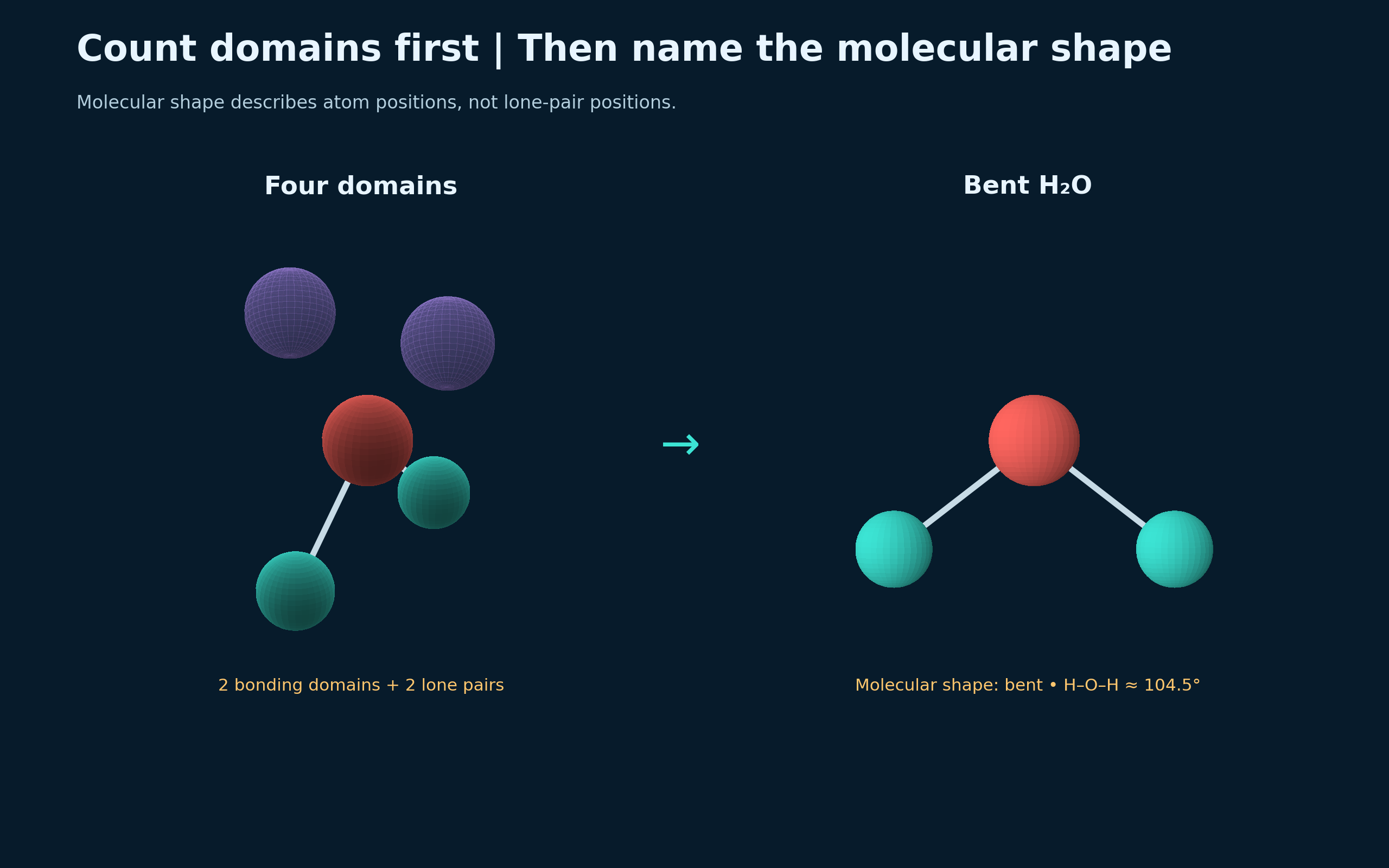
Idealised model
Count domains, then name the shape
A water model separates its four electron domains from the bent arrangement of its atoms.
Download original PNG
Idealised model
Shape, symmetry and polarity
Carbon dioxide, methane and water connect molecular symmetry with dipole cancellation.
Download original PNGAbout these representations
Analytical ideal VSEPR vector models; ammonia and water angles are approximate gas-phase values. Lone-pair clouds are symbols, not calculated orbitals.