
Compare DNA and RNA without reducing the distinction to their names. The collection supports discussion of nucleotides, sugars, bases and representative structures.
Choose from five images below. Open an image for a closer look, download its original PNG, or download all five as a ZIP.
Use these visuals in your lesson
Ask students to sort features into shared and contrasting groups. Keep base identity separate from sugar identity when explaining the two molecule types.
A question to discuss
Which parts of a nucleotide differ between DNA and RNA?
DNA versus RNA: five teaching visuals

Typical strand structure
DNA is usually double-stranded, while RNA is usually single-stranded and can fold into paired regions.
Download original PNG
Shared building blocks
DNA and RNA nucleotides each contain a phosphate, a sugar and a nitrogenous base.
Download original PNG
The 2′ difference
Deoxyribose has hydrogen at the 2′ position, where ribose has a hydroxyl group.
Download original PNG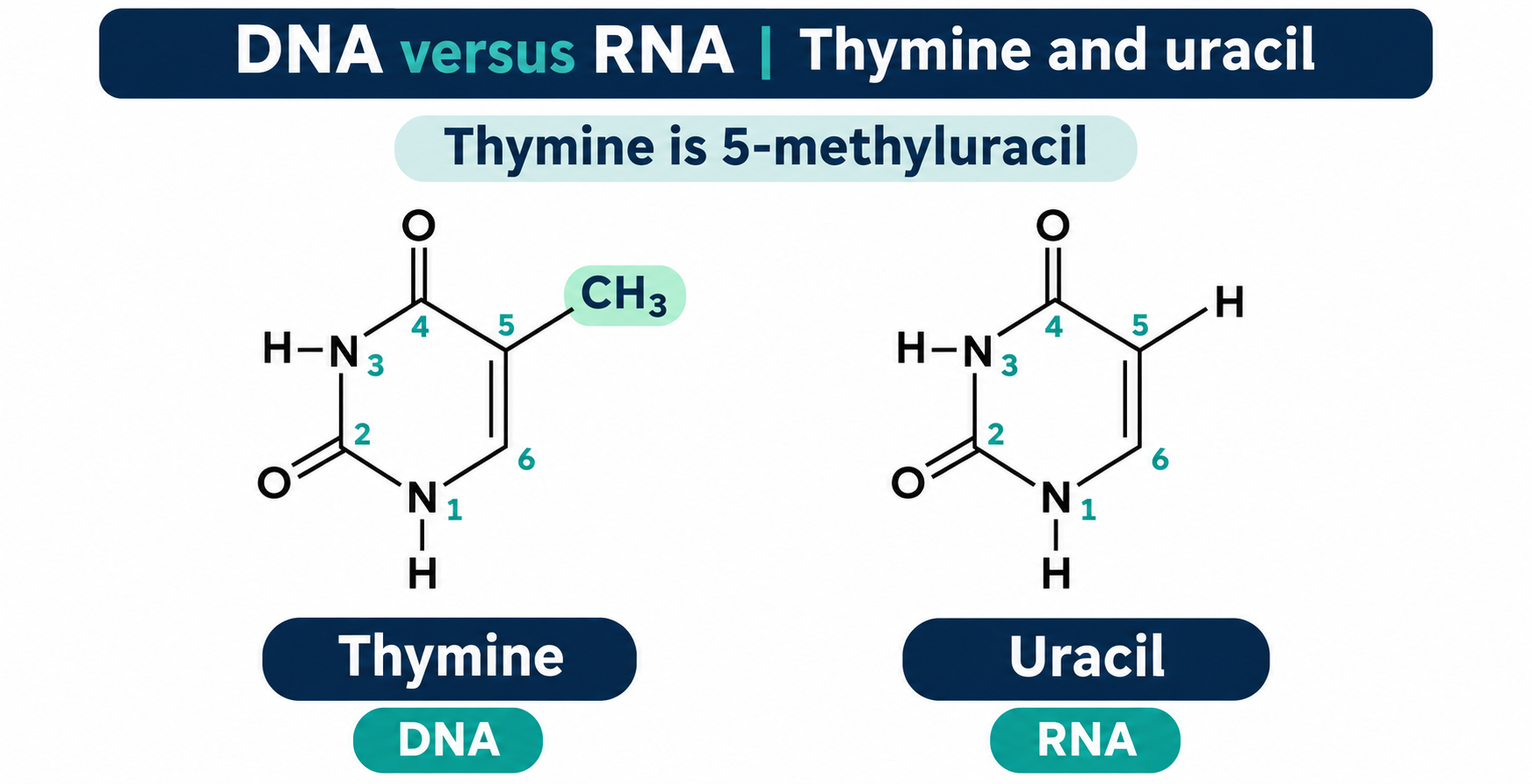
Thymine and uracil
Chemical structures show the methyl group that distinguishes thymine from uracil.
Download original PNG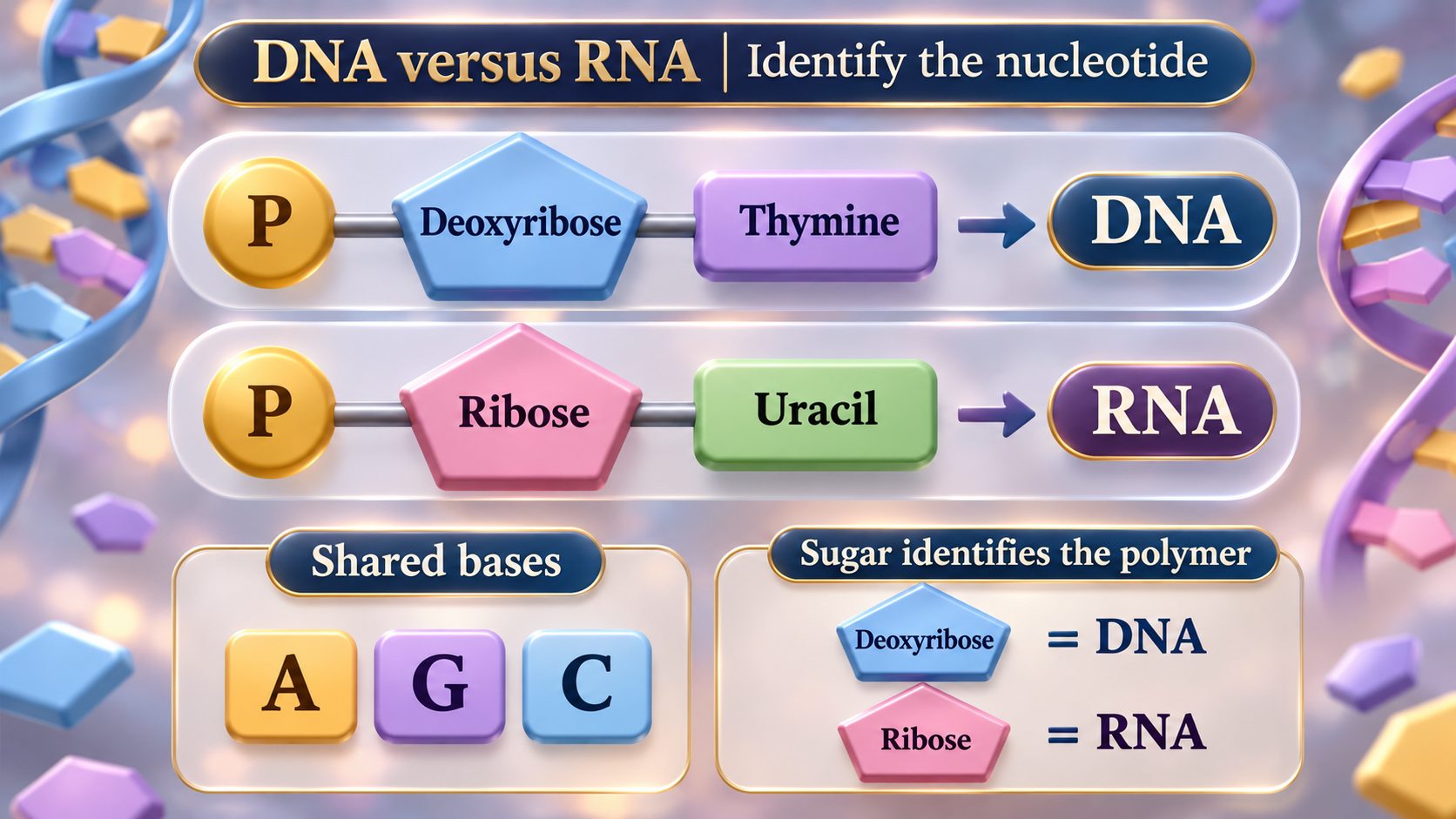
Identify the nucleotide
Sugar and base components help distinguish DNA nucleotides from RNA nucleotides.
Download original PNG