
Explore the endosymbiotic explanation for the origin of mitochondria and chloroplasts. The images support linking an evolutionary account to features of present-day organelles.
Choose from five images below. Open an image for a closer look, download its original PNG, or download all five as a ZIP.
Use these visuals in your lesson
Ask students to connect each line of evidence with the explanation it supports. Keep a schematic evolutionary sequence separate from a directly observed historical event.
A question to discuss
Which organelle features are consistent with an origin from free-living bacteria?
Endosymbiosis: five teaching visuals
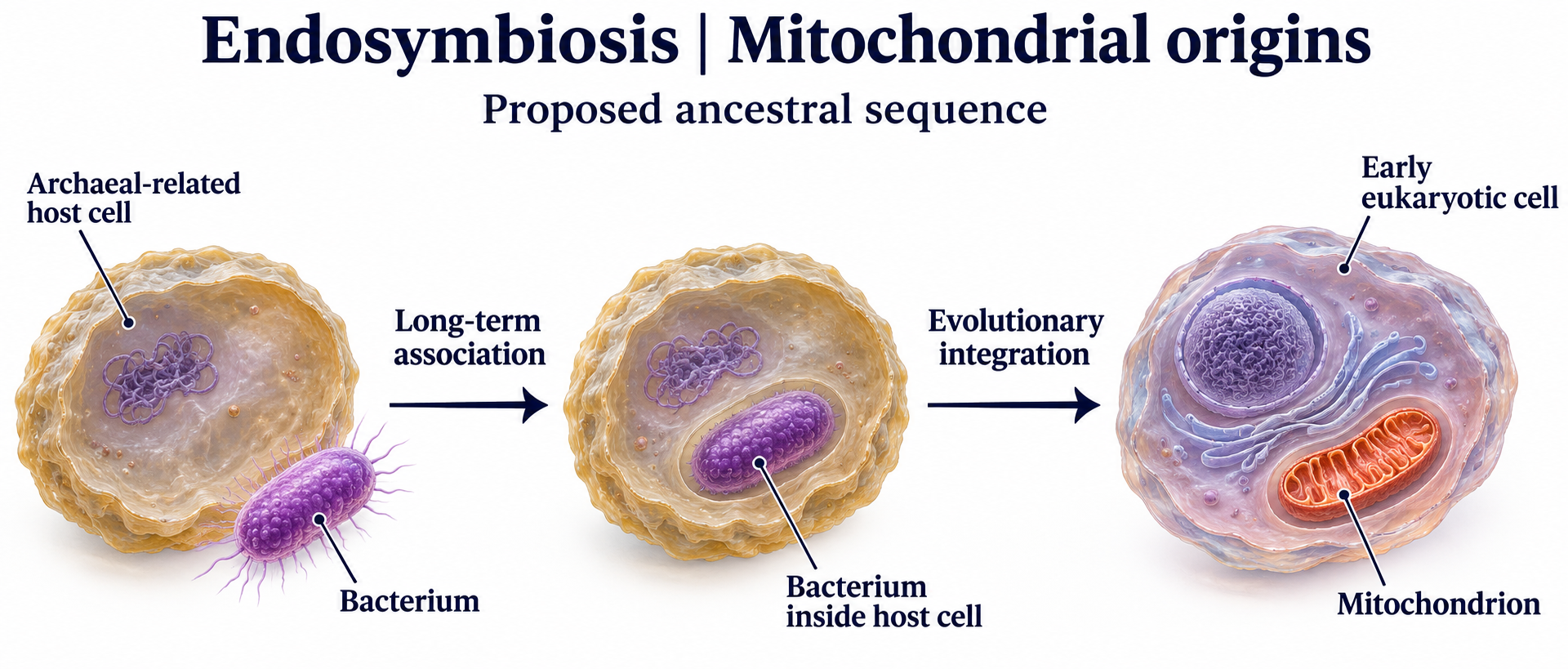
Mitochondrial origins
A proposed ancestral sequence links an archaeal-related host and bacterium with mitochondrial integration.
Download original PNG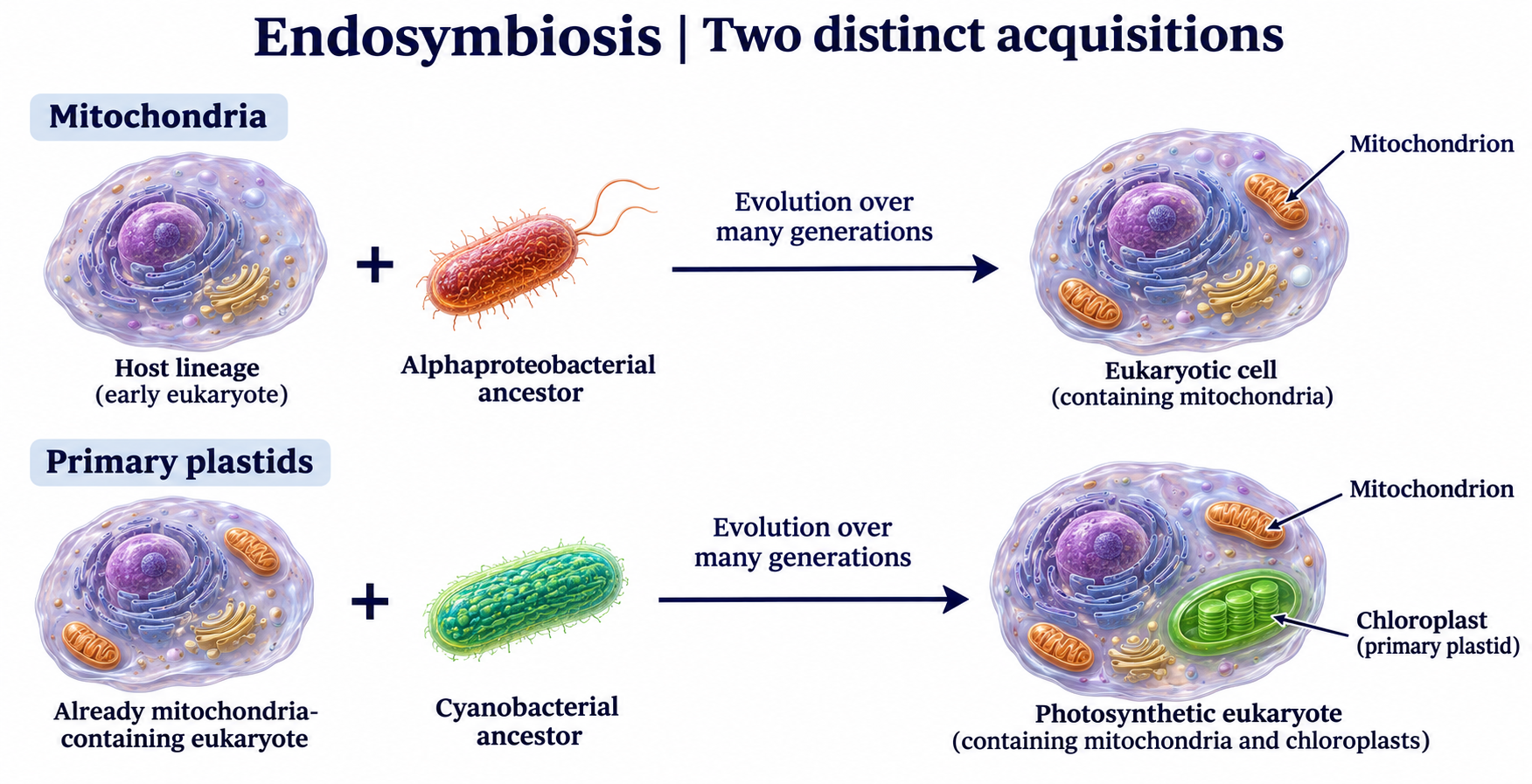
Two distinct acquisitions
Mitochondrial and primary-plastid origins are shown as separate evolutionary acquisitions.
Download original PNG
Evidence from genes
Mitochondrial and plastid sequences connect these organelles with bacterial and cyanobacterial ancestry.
Download original PNG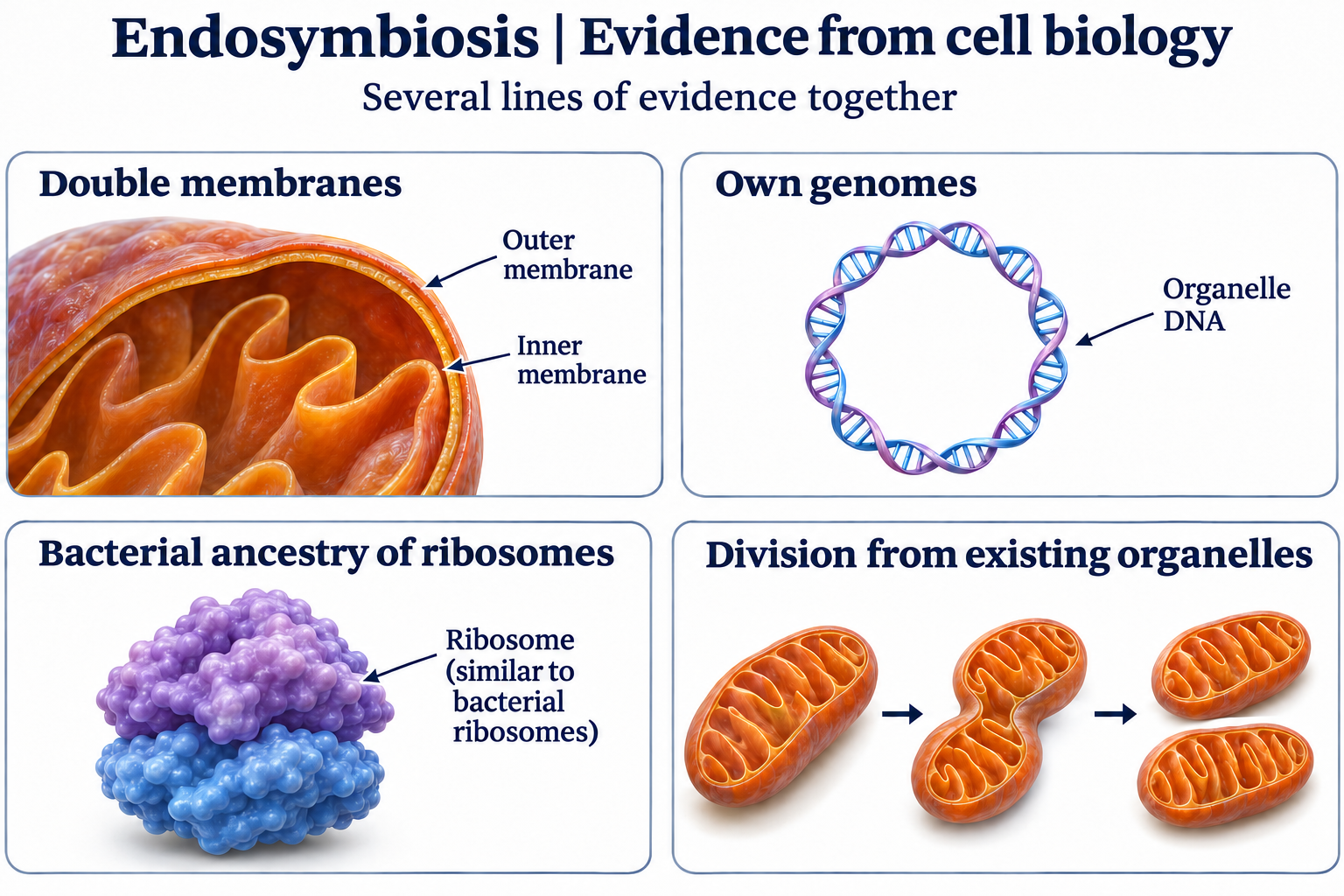
Evidence from cell biology
Membranes, genomes, ribosome ancestry and division provide complementary evidence for endosymbiosis.
Download original PNG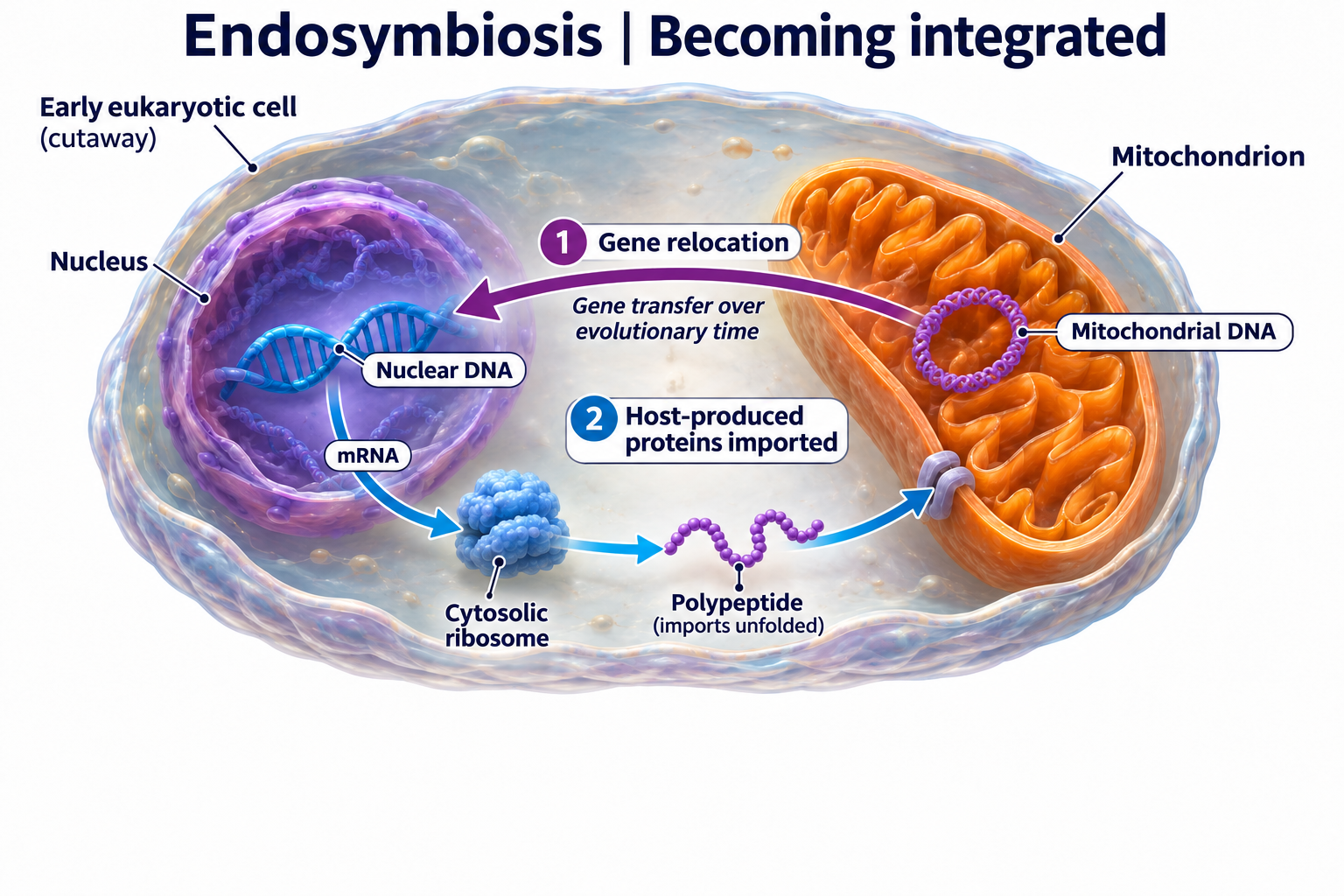
Becoming integrated
Gene relocation and import of host-produced proteins illustrate evolutionary integration of mitochondria.
Download original PNG