
Explore the structures of plant cells, including a mesophyll example and contrasting turgor states. The collection supports both introductory identification and closer discussion of membranes, walls and water movement.
Choose from five images below. Open an image for a closer look, download its original PNG, or download all five as a ZIP.
Use these visuals in your lesson
Compare the wall and cell membrane before discussing turgor. Return to the images after osmosis so students can explain a change in cell appearance.
A question to discuss
Why can a plant cell become turgid without bursting in the same way as an animal cell?
Plant cell: five teaching visuals

Plant cell essentials
A labelled introduction to the cell wall, membrane, nucleus, chloroplasts and central vacuole.
Download original PNG
Cellular structures
Look more closely at the organelles, plasma membrane and tonoplast.
Download original PNG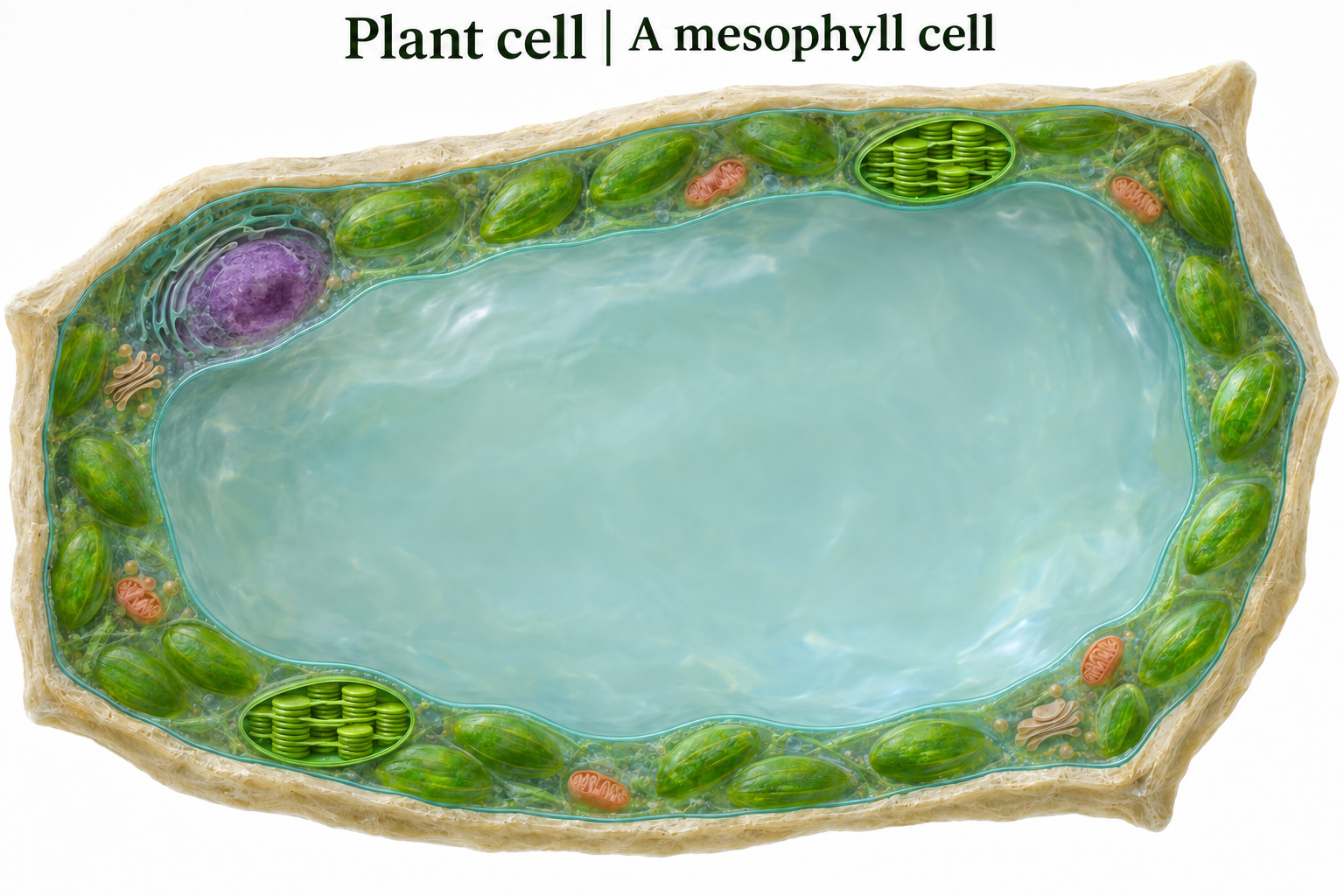
A mesophyll cell
An unlabelled cutaway for exploring a leaf cell and its chloroplasts.
Download original PNG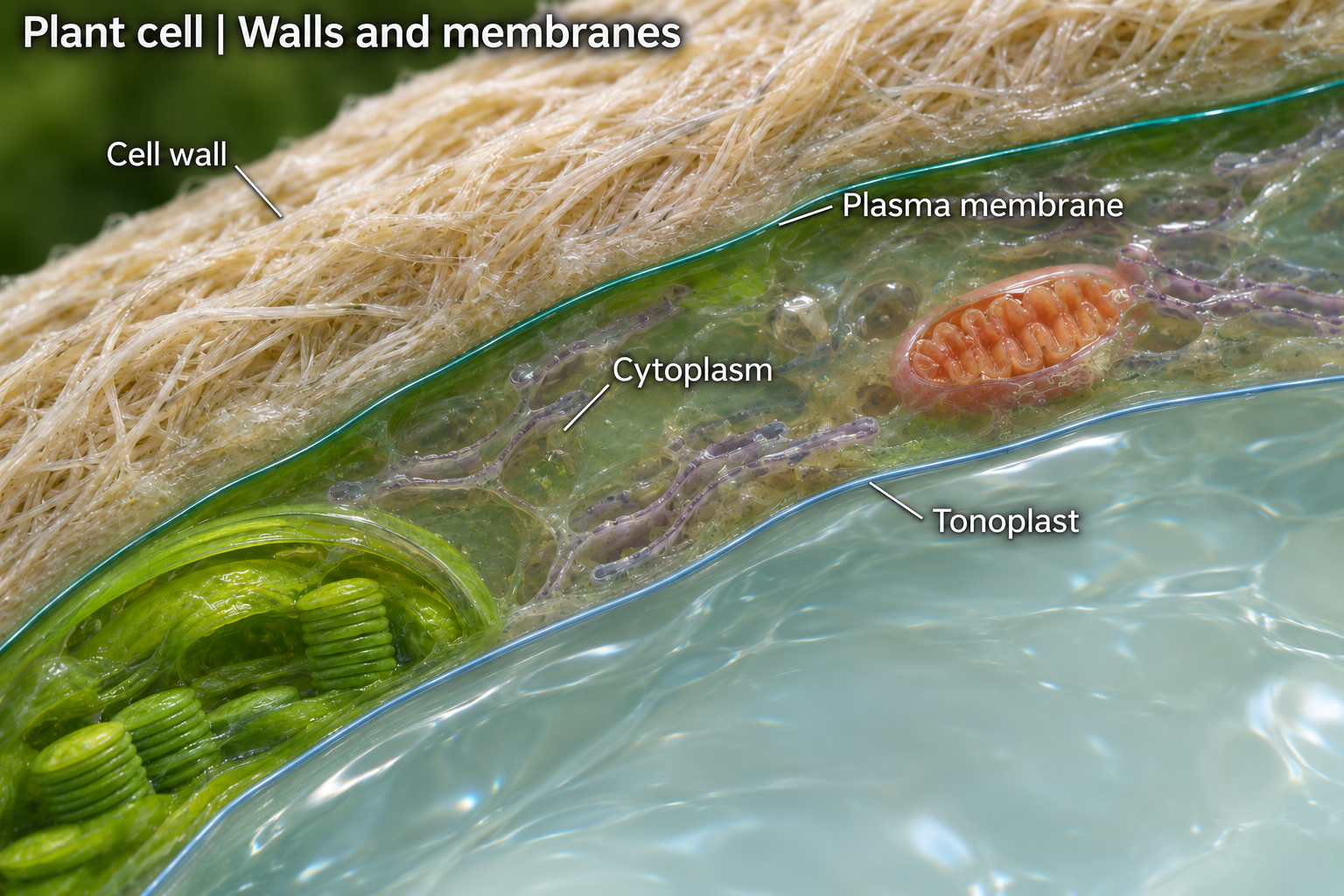
Walls and membranes
A detailed cutaway for discussing the cell wall and internal organisation.
Download original PNG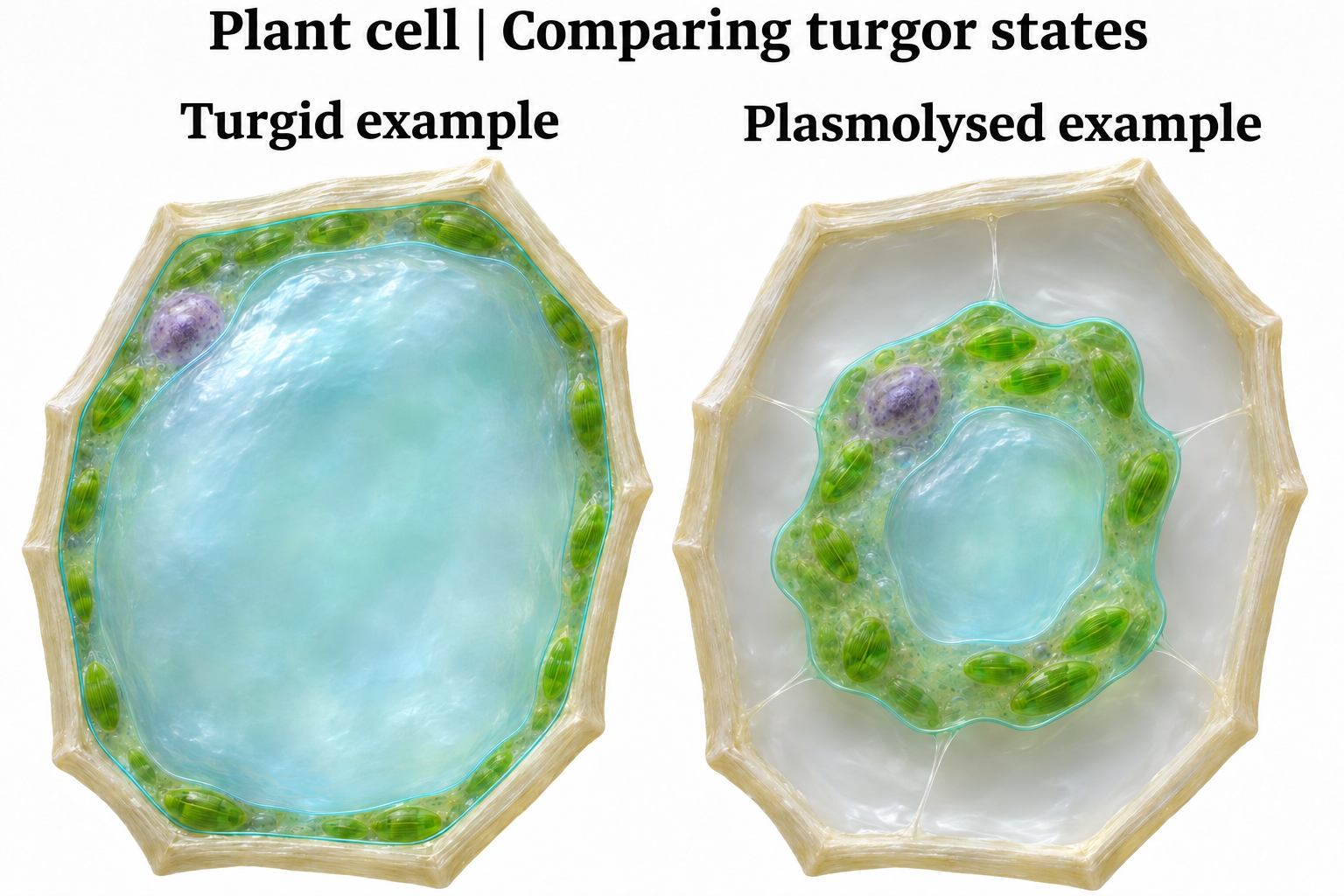
Comparing turgor states
Compare a turgid example with a plasmolysed example when explaining water movement.
Download original PNG