
Follow the sodium–potassium pump through binding, conformational changes and release. The collection keeps the transport balance visible: three sodium ions out and two potassium ions in per ATP hydrolysed.
Choose from five images below. Open an image for a closer look, download its original PNG, or download all five as a ZIP.
Use these visuals in your lesson
Ask students to count ions and charges at each stage. Contrast the ATP-driven pump with a passive channel so the two mechanisms do not become interchangeable in their explanations.
A question to discuss
What is the net movement of positive charge in one pump cycle?
Sodium potassium pump: five teaching visuals
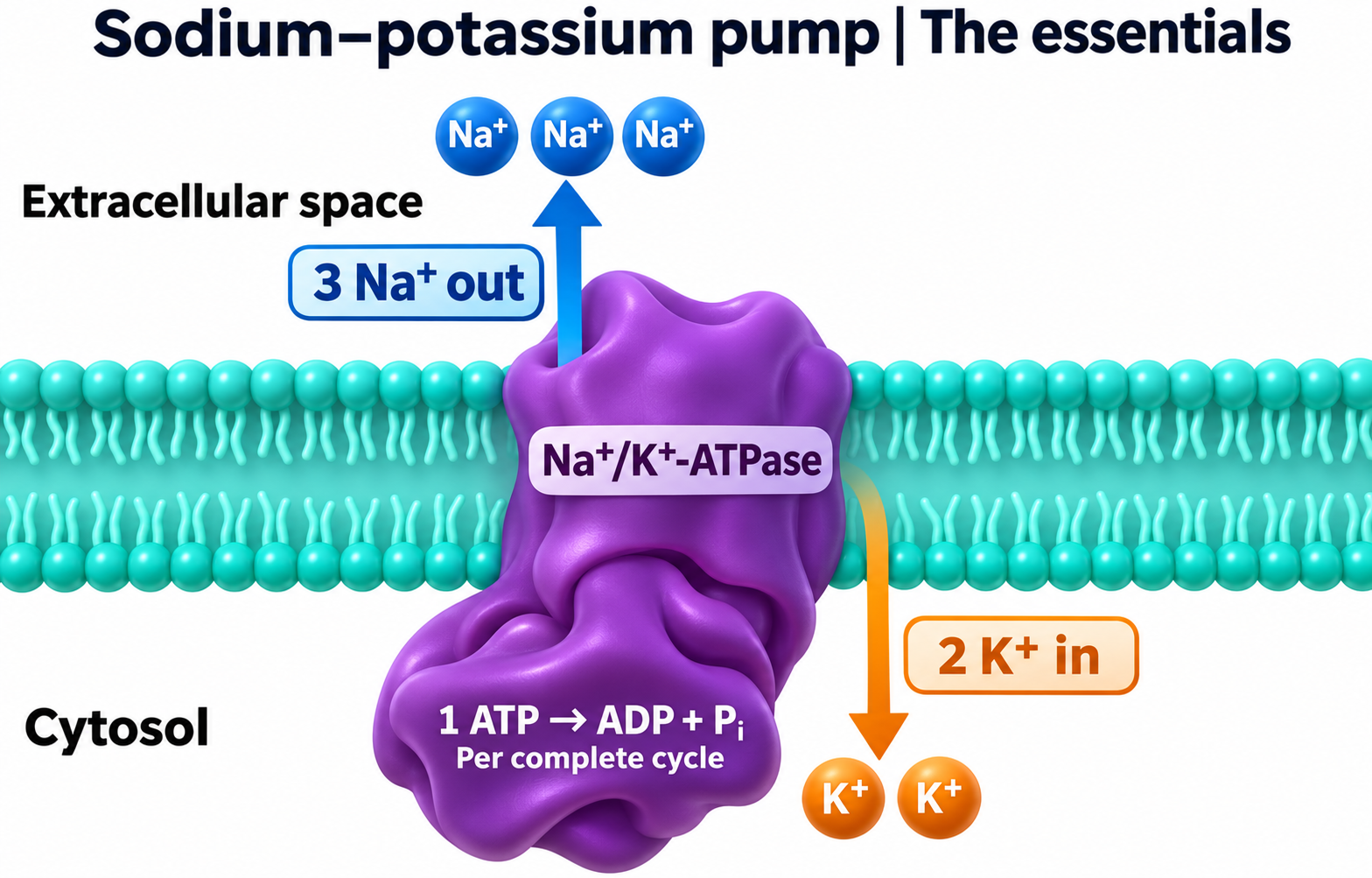
The essentials
Follow three sodium ions out and two potassium ions in per ATP hydrolysed.
Download original PNG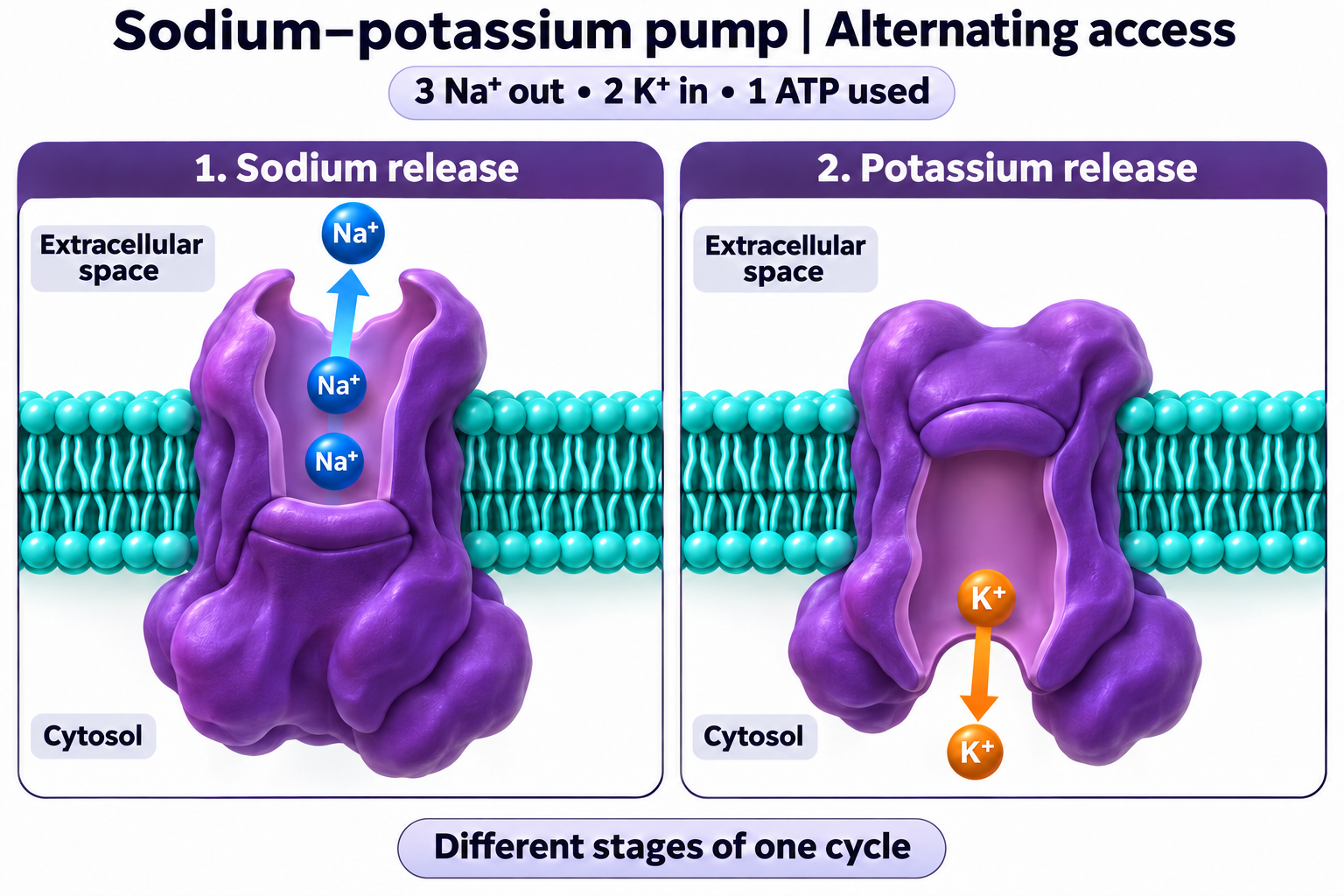
Alternating access
Compare sodium-release and potassium-release stages of one pump cycle.
Download original PNG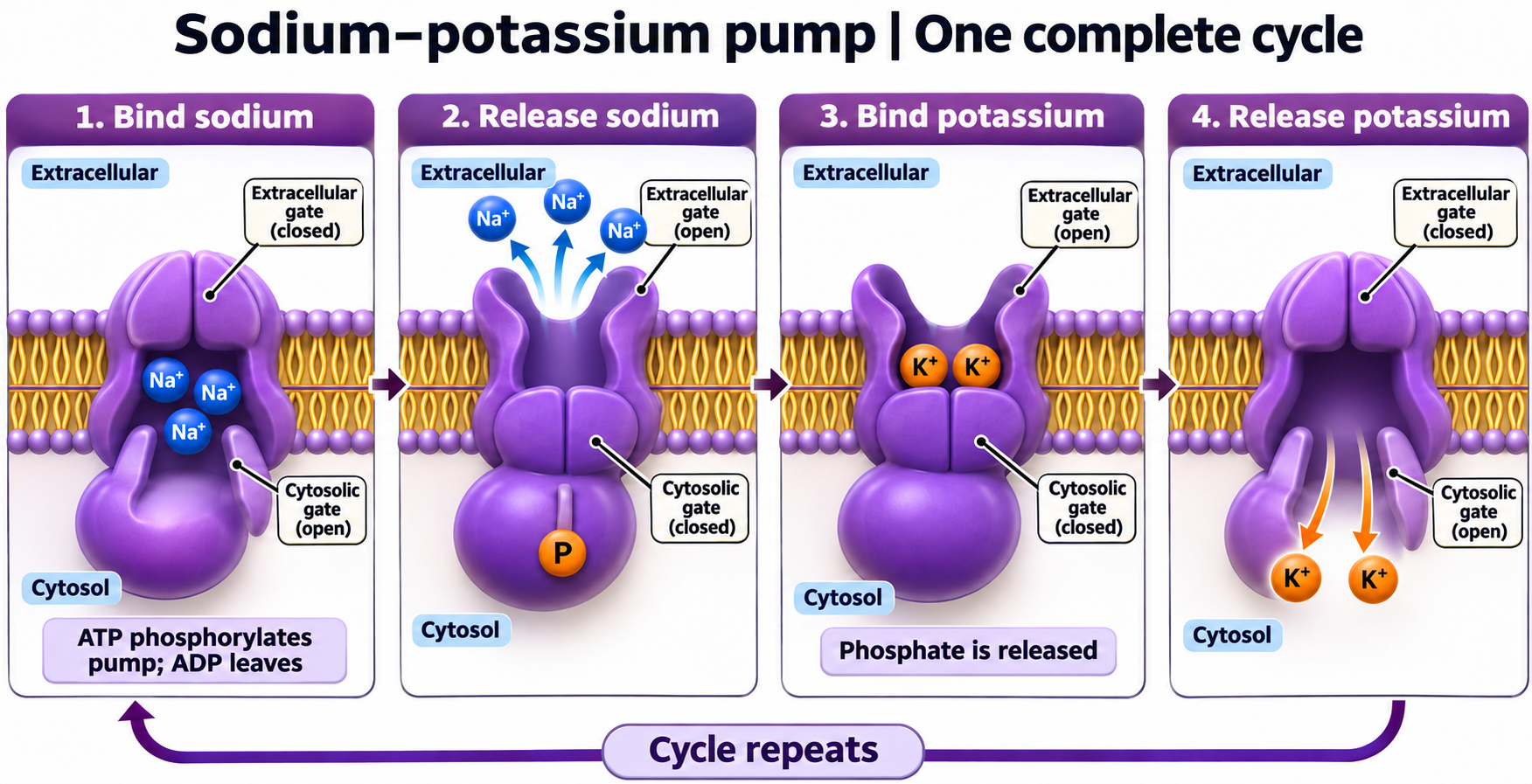
One complete cycle
Follow sodium binding and release, potassium binding and release, and pump phosphorylation.
Download original PNG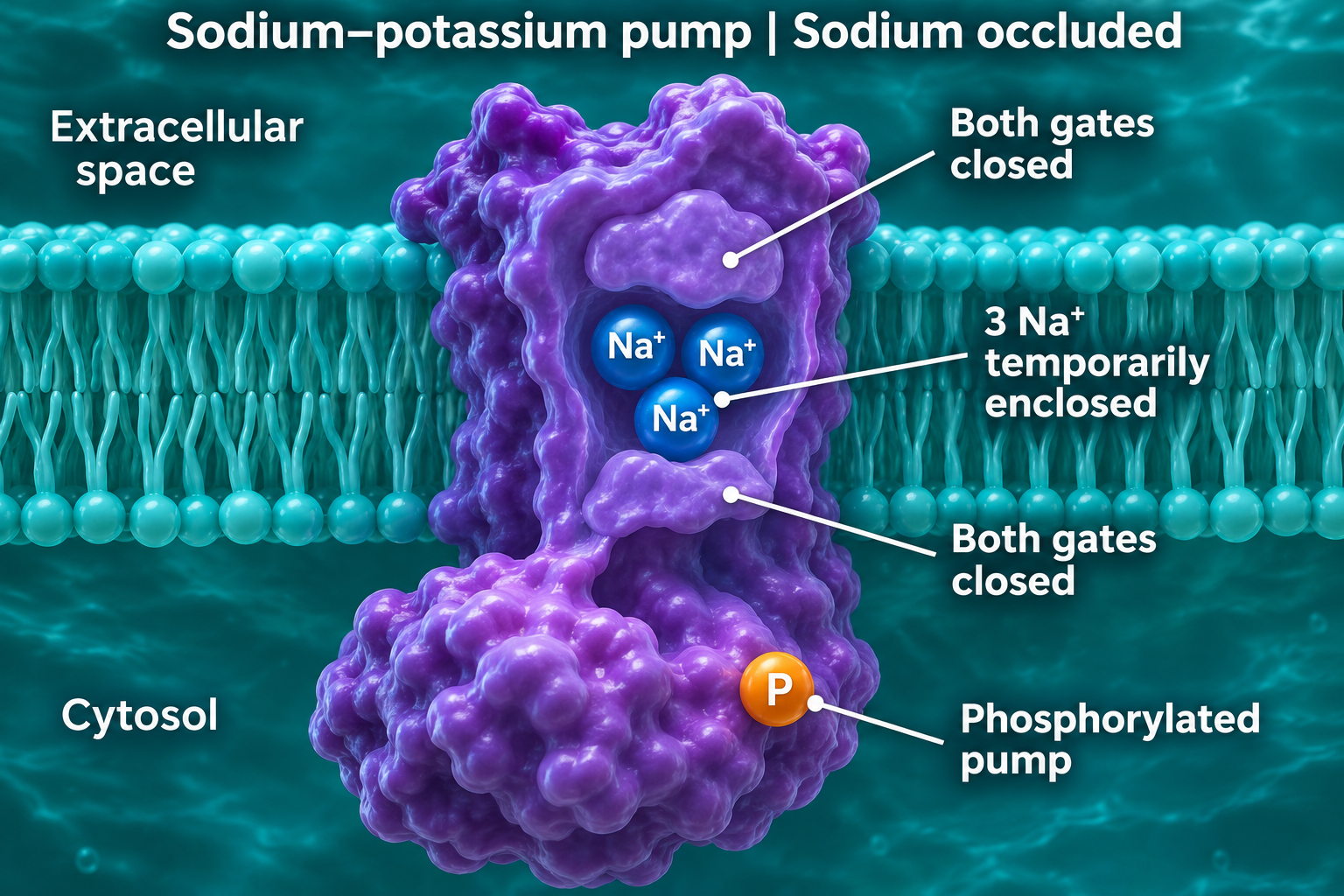
Sodium occluded
View the phosphorylated pump with three sodium ions enclosed and both gates closed.
Download original PNG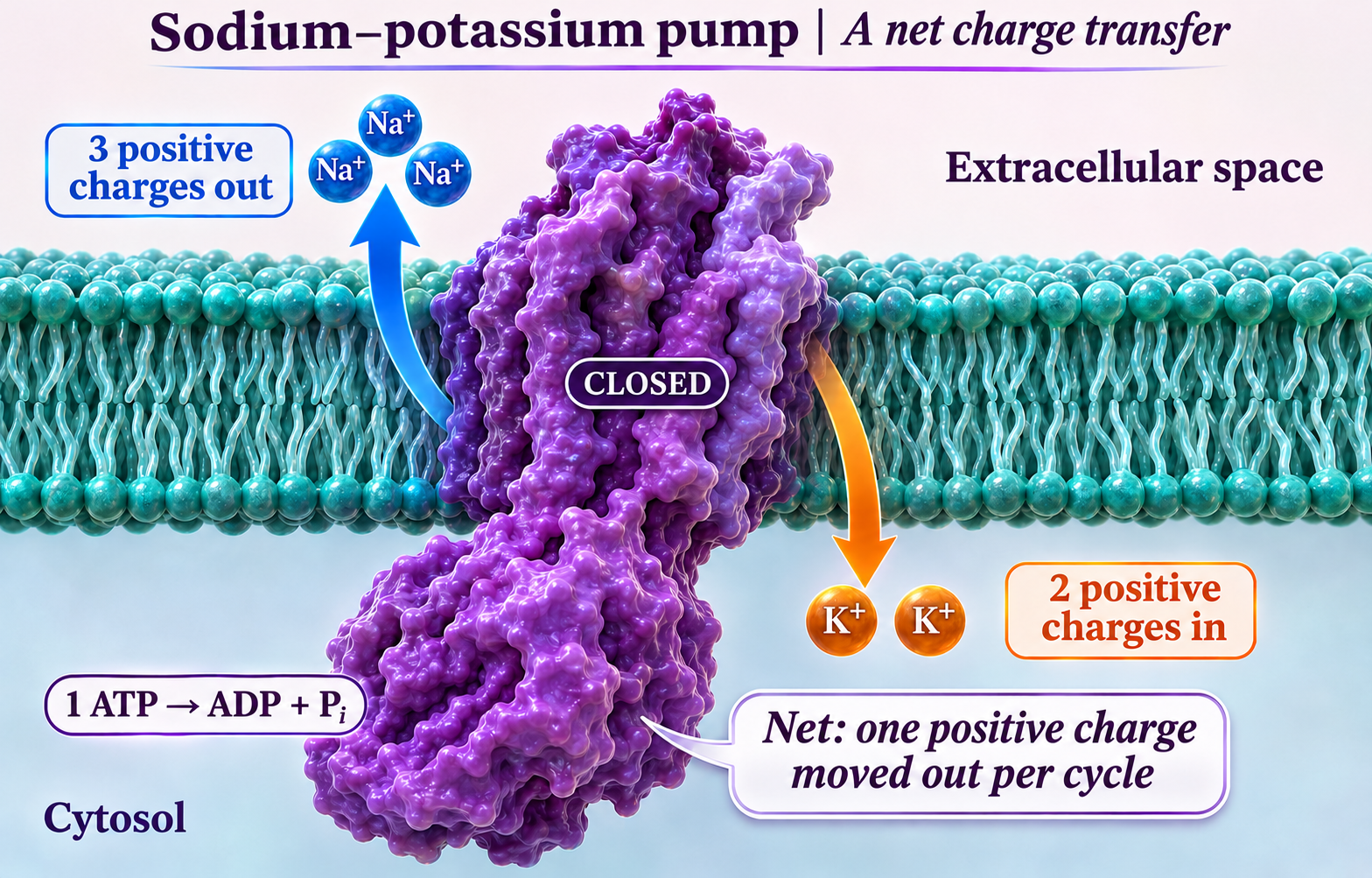
A net charge transfer
Compare three positive charges moving out with two moving in: one net positive charge leaves per cycle.
Download original PNG