
Trace carbon between organisms and environmental stores. These visuals support a connected account of processes such as photosynthesis, respiration, decomposition and combustion.
Choose from five images below. Open an image for a closer look, download its original PNG, or download all five as a ZIP.
Use these visuals in your lesson
Follow one carbon atom through several transfers. Require students to name a process on each arrow rather than simply moving between labelled stores.
A question to discuss
How can the same carbon atom move from the atmosphere into an organism and back again?
The carbon cycle: five teaching visuals
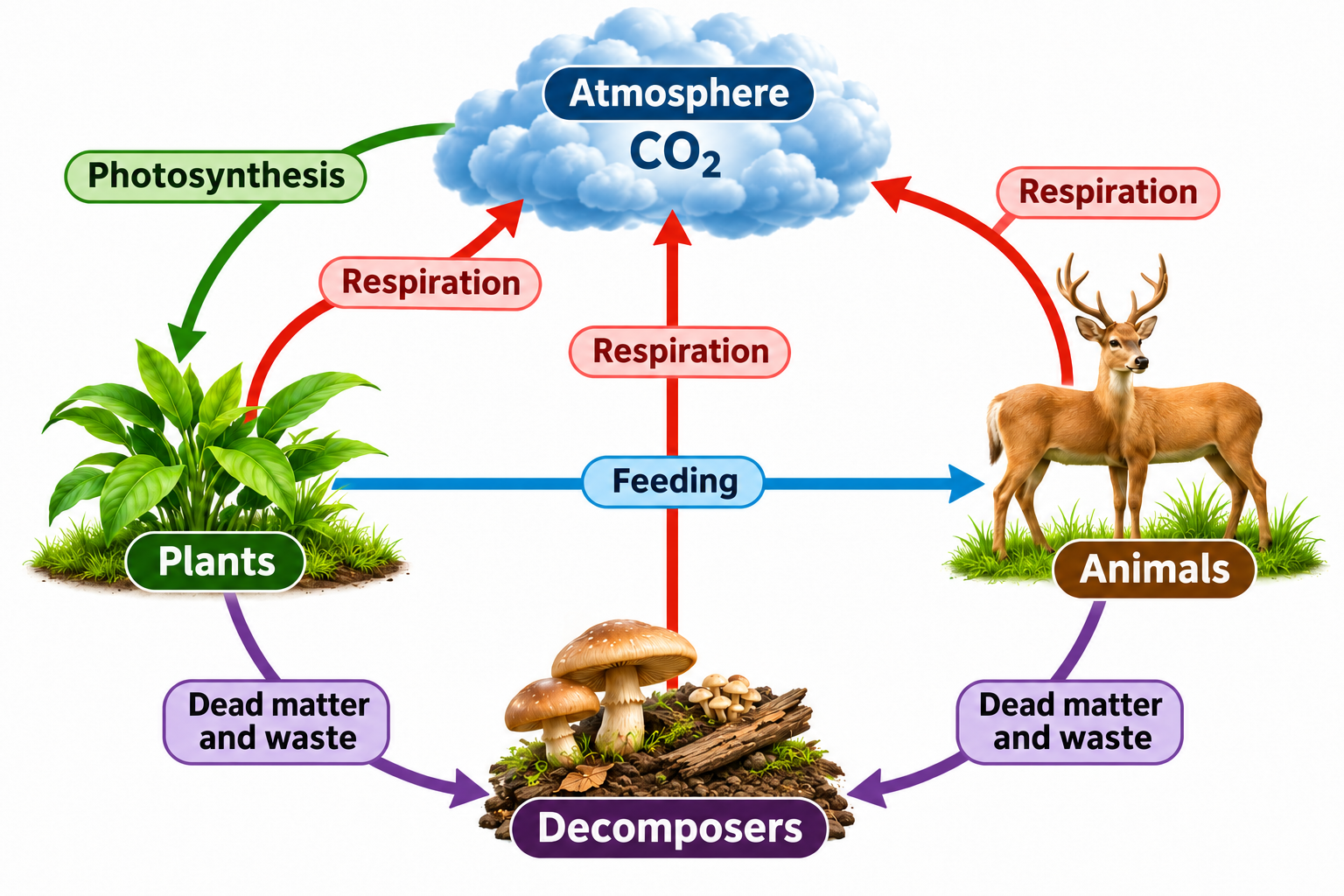
Carbon through living things
Photosynthesis, feeding, decomposition and respiration connect organisms with atmospheric carbon dioxide.
Download original PNG
Land and ocean stores
Carbon moves among vegetation, soil, atmosphere and surface and deep ocean stores.
Download original PNG
Stored carbon and combustion
Burial and geological transformation store carbon in coal, while combustion releases carbon dioxide.
Download original PNG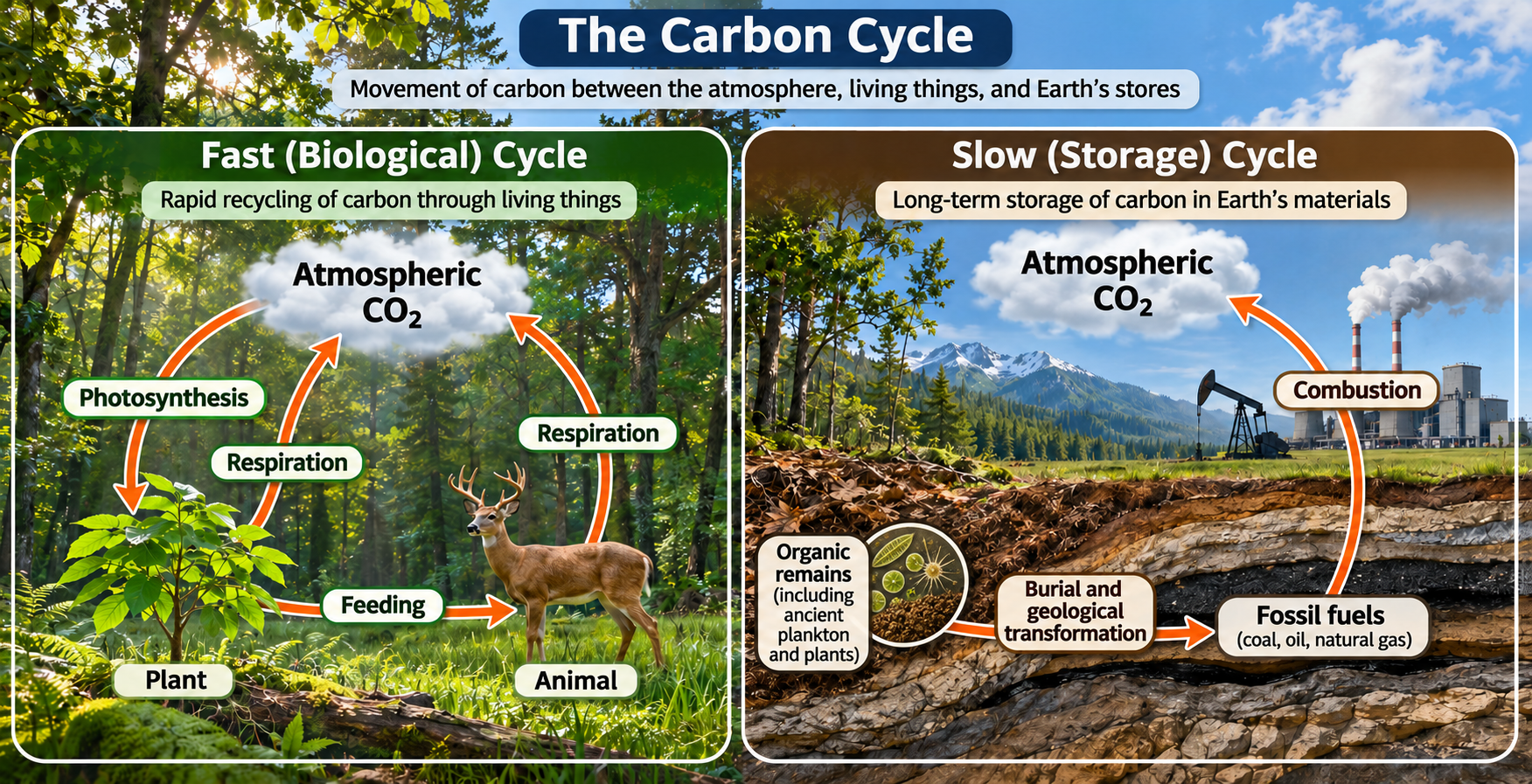
Fast and slow pathways
Biological cycling is compared with long-term storage and fossil-fuel combustion.
Download original PNG
Follow a carbon atom
One possible route takes carbon from atmospheric carbon dioxide through a leaf, herbivore and decomposer.
Download original PNG